
Understanding early childhood social development is essential for any parent or caregiver who wants to raise a confident, emotionally secure, and socially capable child. During the early years, children learn how to express feelings, build relationships, manage conflicts, and develop empathy—skills that shape their success in school and beyond. If you’re searching for clear, practical guidance on how to support your child’s social growth, this article will walk you through what to expect at each stage and how to respond effectively.
We’ve drawn on established child development research and evidence-based parenting strategies to ensure the insights shared here are accurate, practical, and easy to apply in everyday life. From understanding typical milestones to encouraging positive peer interactions, you’ll find actionable tips designed to help you nurture strong social foundations in your child—starting today.
Watching your toddler navigate their first social interactions can stir pride and panic in equal measure (especially during that first playground standoff). Many parents ask what’s “normal” when it comes to sharing, friendships, and big feelings. Research from the American Academy of Pediatrics shows that parallel play dominates around age two, while cooperative play typically emerges between four and five.
This guide draws on established child development principles and real-world strategies. You’ll find milestones in early childhood social development and practical ways to nurture them at home:
- Model turn-taking during games.
- Coach simple feeling words.
- Arrange playdates.
Consider step progress.
Social development is the process through which children learn to interact with others, read social cues, and manage their feelings in group settings. In simple terms, it’s how a child figures out when to share, when to speak, and how to handle big emotions (yes, even the dramatic toy standoff moments). Researchers link strong early social skills to better academic performance and mental health later in life (Denham et al., 2012).
So why does this matter? Because early childhood social development lays the groundwork for school readiness, healthy friendships, and empathy. A child who can wait their turn or express frustration with words instead of tears is better prepared for classroom routines and teamwork.
Focus on these three pillars:
- Self-regulation – managing impulses.
- Communication – clearly expressing needs.
- Empathy – understanding others’ feelings.
Start small: model calm behavior, coach simple feeling words, and praise cooperative play. Pro tip: practice turn-taking during everyday games to build these skills naturally.
The Toddler Stage (Ages 1–3): Laying the Social Foundation
The toddler years are where the real groundwork for early childhood social development begins. Around age one, most children play alone. By two, they shift into parallel play (playing alongside other children without directly interacting). I’ll admit, I once panicked watching my toddler ignore another child at the park. I thought something was wrong. It wasn’t. Parallel play is normal—and necessary.
Toddlers also become expert imitators. If you clap, they clap. If you sigh dramatically (guilty), they might copy that too. This imitation is how they learn social rules. You’ll even spot the first flickers of empathy—like offering a toy when someone cries. It’s small, but it’s huge.
Now, about sharing. I made the classic mistake of forcing it. “Give him the truck. Now.” Cue meltdown. Toddlers struggle with sharing because they’re just developing a sense of self and ownership. In their world, “mine” isn’t selfish—it’s security. Expecting instant generosity is like expecting a season-one villain to become a hero overnight (even Darth Vader needed time).
Sharing is learned, not automatic.
Here’s what works better:
- Model positive interactions. Say “please” and “thank you.” Use gentle tones. They copy what they see.
- Narrate emotions. “You seem happy with that truck.” “It’s frustrating when blocks fall.” This builds emotional vocabulary.
- Practice turn-taking. Roll a ball and say, “My turn, your turn.” Keep it low-pressure.
Pro tip: Praise effort, not perfection. Social skills grow through repetition—and plenty of do-overs.
The Preschool Stage (Ages 3–5): Learning to Connect and Cooperate
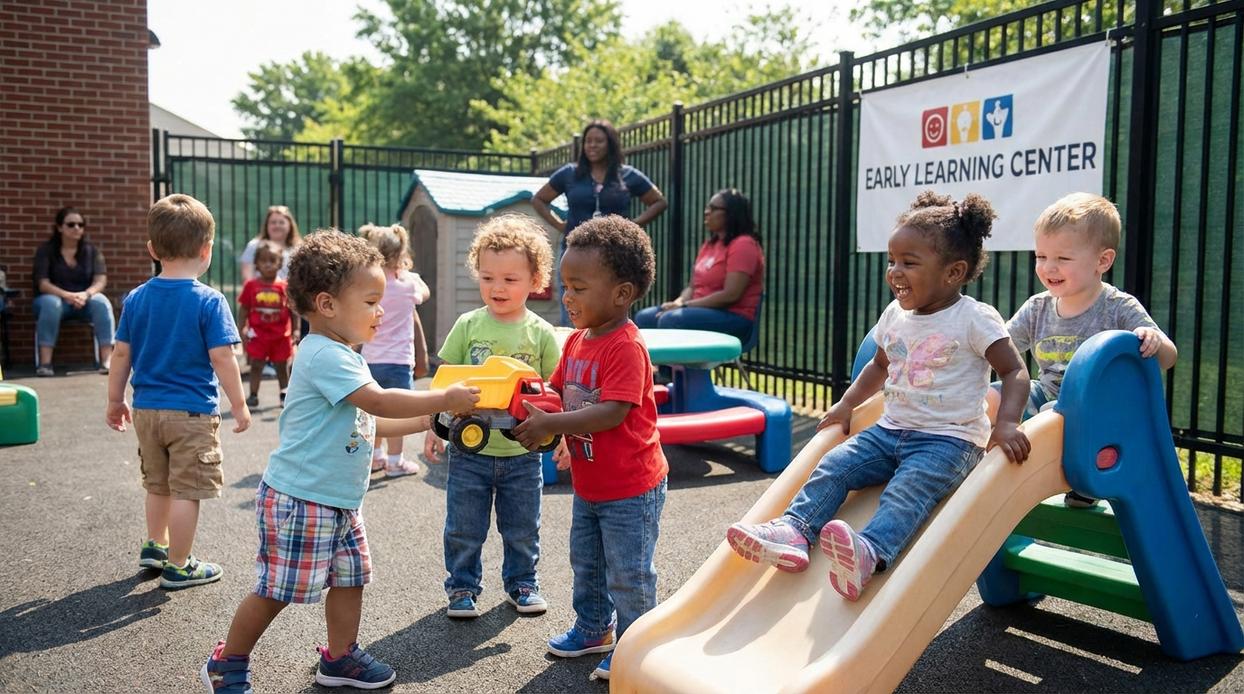
Between ages three and five, something remarkable happens. Children move from playing near each other to playing with each other. This shift to cooperative play—working together toward a shared goal—might look like building a block “zoo” or pretending to run a bakery. (Yes, you will be assigned the role of “customer” at least 47 times.)
At this stage, kids begin understanding simple rules in games and forming their first real friendships. Instead of grabbing a toy, you’ll hear early negotiation skills emerge: “Can I have that block when you’re done?” That back-and-forth is part of early childhood social development, where children practice compromise, patience, and perspective-taking.
Of course, not everyone agrees that preschoolers can truly cooperate. Some argue it’s just parallel play with better marketing. However, research from the American Academy of Pediatrics shows that guided peer interaction significantly improves social competence and emotional regulation. In other words, those tea parties matter.
So, how can parents help? First, try role-playing at home. Practice how to ask, “Can I play?” or what to say if someone says “no.” It may feel silly—but kids love a rehearsal.
Next, leverage story time. Books about friendship and resolving conflicts offer safe ways to explore big feelings.
Finally, arrange short, structured playdates with one or two children. Smaller groups reduce overwhelm and create space for turn-taking.
For deeper insight into why this matters, explore how play shapes brain development in kids.
After all, today’s sandbox negotiations are tomorrow’s teamwork skills.
Navigating Common Social Hurdles with Confidence
When toddlers hit or grab, it can feel alarming. But think of it as a dropped phone call, not a villain origin story. In early childhood social development, these moments are usually a breakdown in communication, not malice. Swap the behavior with simple scripts: “We use gentle hands. If you want a turn, you can ask.” Clear words become the bridge where frustration once stood.
Shyness is different. Some children enter new settings like cautious swimmers dipping a toe before diving in. Let them:
- Arrive early to explore the space quietly
- Observe from the sidelines before joining
- Hold a familiar object for comfort
Pressure only tightens the knot (and no one relaxes when rushed).
For the classic “I want it now!” dilemma, make time visible. A visual timer works like a traffic light, signaling when their turn is coming. Waiting becomes concrete, not endless. When children can see time, they can trust it.
Social growth isn’t a race; it’s a rhythm. In early childhood social development, some kids jump into groups, others hang back. Fast confidence vs. steady confidence: one looks bold today, the other builds resilience for tomorrow. Perfection vs. patience? Patience wins every time. Consistent, calm guidance teaches skills; pressure teaches fear. You’re your child’s primary coach and mirror (they copy more than they listen). This week, choose one strategy—role-play, emotion labeling, or playdate prep—and practice daily. Celebrate small steps; progress, not perfection, is the real milestone. Small wins compound into lasting social confidence. Keep showing up, especially on hard days.
Helping Your Child Thrive Socially Starts Today
You came here looking for clarity on how to nurture your child’s growth, confidence, and connection with others. Now you understand how small, consistent actions—like modeling empathy, encouraging communication, and creating safe peer interactions—shape strong early childhood social development.
If you’ve been worried about shyness, big emotions, difficulty sharing, or trouble making friends, you’re not alone. These challenges can feel overwhelming. But with the right strategies and daily support, they become opportunities for growth instead of setbacks.
The most important step now is action. Start applying one or two of the techniques you’ve learned today—whether it’s guided playdates, emotion coaching, or positive reinforcement. Consistency is what turns simple habits into lifelong social skills.
If you want practical, parent-tested strategies that truly work, explore more of our expert-backed resources designed to make parenting easier and more effective. Thousands of families rely on our guidance to support confident, socially capable kids.
Your child’s social future begins with what you do next—start today.