Every parent wants to give their child the best possible start—but with so much conflicting advice, it’s hard to know which strategies truly support healthy growth. If you’re searching for practical, research-backed guidance on parenting, toddler care, and early learning, this article is designed to give you clear, actionable insights you can use right away.
We explore essential parenting strategies, key child development milestones, and age-appropriate learning paths that nurture curiosity and confidence. Backed by current child development research and expert recommendations, this guide highlights the importance of play in development and explains how everyday interactions shape cognitive, emotional, and social growth.
Whether you’re navigating toddler tantrums, building positive routines, or encouraging early learning at home, you’ll find trusted, evidence-informed advice to help you support your child’s development with clarity and confidence.
More Than Just Fun: Why Play is a Child’s Most Important Work
Play isn’t a break from learning—it is learning.
Many parents pack calendars with lessons and leagues assuming structure equals success. I get it. College feels closer year. But research in developmental psychology shows unstructured play strengthens executive function, language growth, and emotional regulation (American Academy of Pediatrics 2018).
Critics argue kids need rigorous academics early. Yet countries with later formal schooling like Finland rank high in outcomes (OECD data).
Understanding the importance of play in development helps you protect free time and create space for imagination to work.
Building a Better Brain: How Play Shapes Cognitive Skills
Have you ever wondered why children can spend hours stacking blocks, only to knock them down and start again? It may look simple, but in those moments, powerful learning is happening.
Problem-Solving and Critical Thinking
When a child builds a tower or solves a puzzle, they’re experimenting with cause and effect—”If I put the big block on top, will it fall?” That’s hypothesis testing in its earliest form (yes, like a tiny scientist in action). Activities like board games or figuring out playground rules also teach logical sequencing and strategy. Sound familiar? It’s the same thinking adults use to plan projects or manage budgets. Some argue structured academics should replace playtime to speed up learning. However, research from the American Academy of Pediatrics shows that play-based learning strengthens executive function and problem-solving skills (AAP, 2018). In other words, play builds the mental scaffolding academics rely on.
Creativity and Imagination
Now think about pretend play. When children play house or transform into superheroes, they’re building entire worlds from scratch. They invent conflicts, design solutions, and adapt storylines on the fly. That creative flexibility is the foundation of innovation—something employers consistently rank as a top skill (World Economic Forum, 2023). Sure, some may say it’s “just make-believe.” But isn’t every invention first imagined before it’s built?
Language and Literacy Development
Meanwhile, imaginative play demands communication. Children negotiate roles (“You be the doctor, I’ll be the patient”), create narratives, and experiment with new vocabulary. This storytelling strengthens literacy skills and conversational confidence. Pro tip: Join their story occasionally and introduce a new word naturally.
Focus and Concentration
Finally, consider attention span. When kids choose an activity they love, they practice sustained focus. That intrinsic motivation is key to the importance of play in development—and to raising curious, capable thinkers.
Learning to Connect: The Social Superpowers of Play
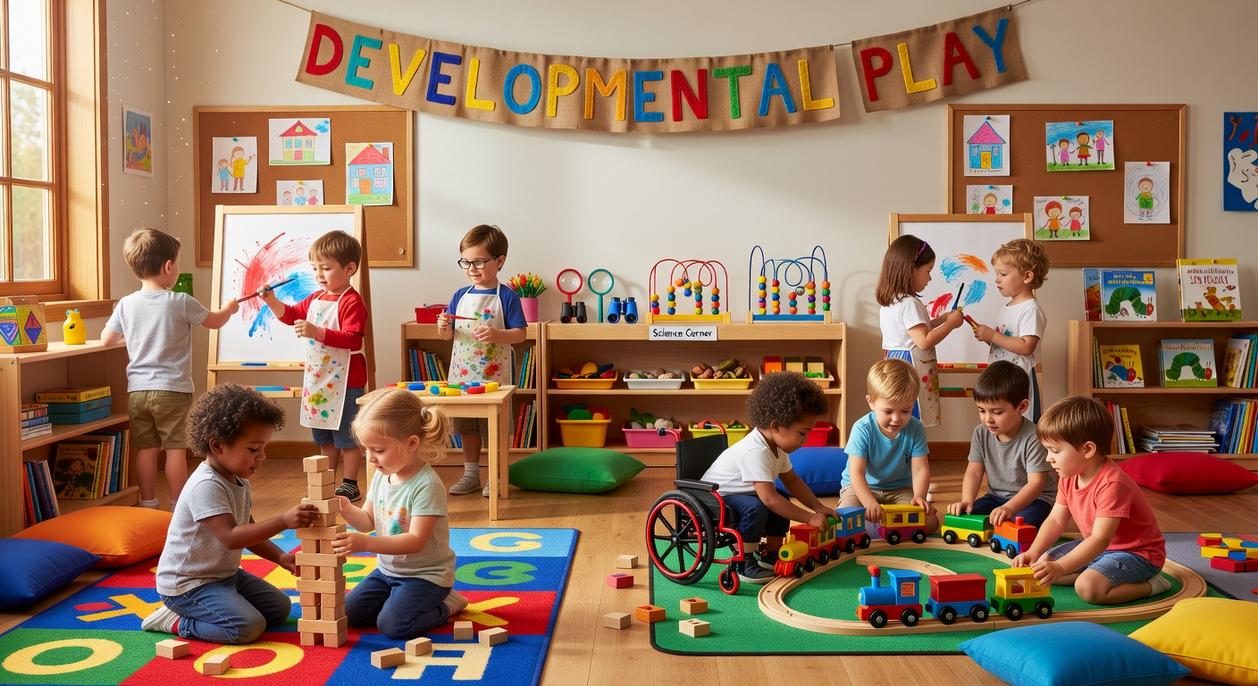
Last week, I watched two preschoolers argue over a single red shovel in the sandbox. Within minutes, they had transformed from rivals into construction partners, building what they proudly called “the tallest mountain ever.” No adult script. No referee. Just play doing what play does best.
That moment perfectly captures the importance of play in development.
Cooperation and Negotiation
When children share toys, decide on game rules, or work together to build a blanket fort, they’re practicing cooperation—the ability to work toward a shared goal. Negotiation (the process of discussing to reach agreement) shows up when one child says, “You be the dragon first, then it’s my turn.” These small exchanges build collaboration skills they’ll later use in classrooms, workplaces, and even group chats (yes, even those chaotic ones).
Some argue that structured activities teach teamwork better. But unstructured play forces kids to create the structure themselves. That’s the real workout.
Empathy and Perspective-Taking
Role-playing is more than cute costumes. When a child pretends to be a doctor, teacher, or superhero, they practice perspective-taking—imagining someone else’s thoughts and feelings. Empathy (understanding and sharing another’s emotions) grows naturally here. A child playing “parent” might gently rock a doll and whisper comfort, mirroring care they’ve received.
Conflict Resolution
Disagreements during play are low-stakes rehearsals for real life. Who gets the first turn? What counts as “out”? These moments teach compromise and fairness. Pro tip: resist jumping in too quickly. Kids often solve it faster than we expect.
Emotional Regulation
Play also helps children process big feelings. Frustration after losing a game, excitement during a chase, disappointment when the tower falls—these are safe emotional reps. They learn regulation (managing emotions appropriately) through repetition.
As children move through the language development stages parents should know, play strengthens both words and relationships.
And sometimes, it all starts with one red shovel.
How to Foster Meaningful Play: Simple Strategies for Parents
First, prioritize unstructured time. That means free play—child-led activity without adult-set goals or outcomes. While enrichment classes have their place, research shows that open-ended play strengthens executive function, problem-solving, and emotional regulation (American Academy of Pediatrics, 2018). In other words, boredom isn’t a problem; it’s a launchpad. This is where the importance of play in development becomes visible in real time.
Next, create a “yes” space. A “yes” space is a safe, accessible area where most things are fair game. Think blocks, cardboard boxes, art supplies, and dress-up clothes—open-ended toys, or materials that can be used in multiple ways rather than one fixed purpose. (A cardboard rocket ship often beats a flashing plastic one.) Pro tip: Rotate toys every few weeks to reignite curiosity without buying more.
Equally important, play with your child—but follow, don’t lead. If they’re running a pretend bakery, you’re the customer. This builds connection and reinforces confidence.
Finally, observe and acknowledge. Notice effort and strategy: “You balanced that carefully!” Specific praise fuels persistence—and that’s a skill no app can download.
Play is not a luxury; it is a biological necessity. When we compare flashcards versus fort-building, we see two paths: A) structured drills, B) imaginative exploration. Research shows the importance of play in development links directly to stronger memory, language, and emotional regulation (American Academy of Pediatrics). Through play, children practice 1. problem-solving, 2. empathy, and 3. resilience. Some argue more academics earlier guarantees success, but brains wired for curiosity thrive on joyful discovery (think young Shuri experimenting). Make space, guard time, and trust that unhurried, child-led moments build lifelong learners and happier humans. A foundation for everything that follows.
Helping Your Child Thrive Through Play and Purpose
You came here looking for practical, meaningful ways to support your child’s growth—and now you have a clearer roadmap. From understanding developmental milestones to creating simple, engaging daily routines, you’re better equipped to nurture confidence, curiosity, and resilience in your little one.
At the heart of it all is the importance of play in development. Play isn’t just entertainment—it’s how children build language, problem-solving skills, emotional regulation, and social confidence. When play is missing or overlooked, children can struggle to express themselves, focus, and adapt. That’s a pain point many parents feel deeply—the worry of not doing “enough” or not doing the “right” things.
The good news? You don’t need expensive tools or complex systems. You need intentional moments, supportive guidance, and strategies rooted in how children truly learn.
If you’re ready to turn everyday moments into powerful learning opportunities, explore more expert-backed parenting strategies and toddler development insights with us. Families trust our guidance because it’s practical, research-informed, and designed for real life.
Start today—discover simple steps you can use right now to support your child’s growth and give them the strong, joyful foundation they deserve.