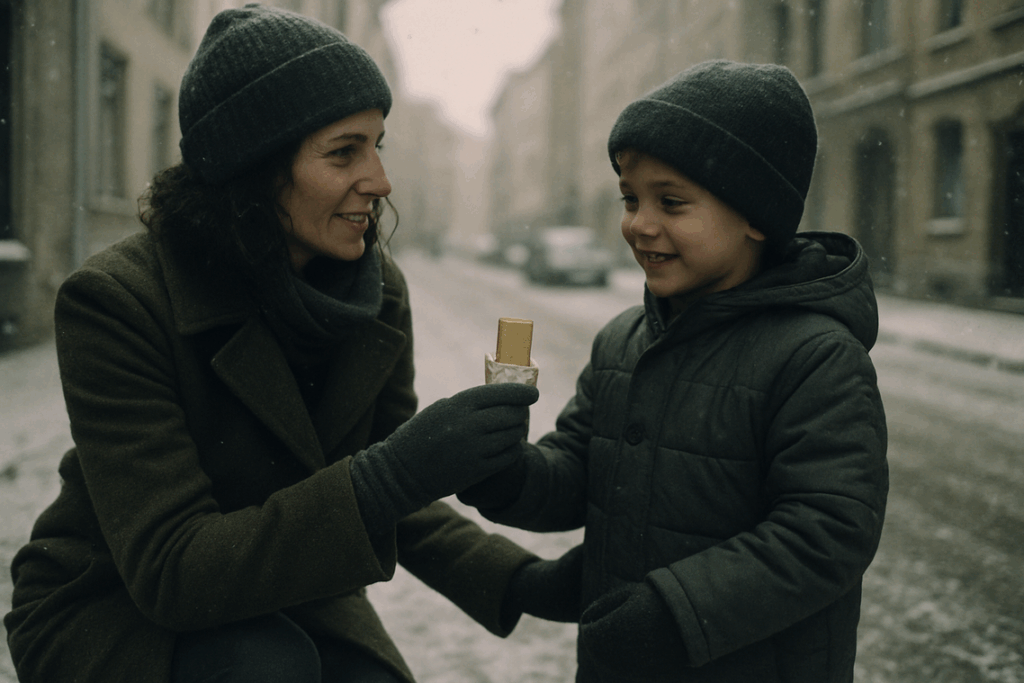

If you’re searching for practical, age-appropriate ways to guide your child toward independence, accountability, and confidence, you’re in the right place. Many parents know that responsibility is important—but knowing exactly how to nurture it in everyday life can feel overwhelming. This article is designed to simplify that process with clear, research-informed strategies that fit naturally into your family’s routine.
We’ve drawn from established child development principles and widely recommended parenting practices to ensure the guidance here is both trustworthy and realistic. Rather than vague advice, you’ll find actionable steps that align with how children actually learn and grow.
Whether you’re navigating toddler routines or supporting a school-aged child, this guide will walk you through teaching kids responsibility in ways that build life skills, strengthen character, and encourage long-term independence—without power struggles or unrealistic expectations.
Why Responsibility is a Superpower for Personal Growth
Let’s be honest—few things are more frustrating than repeating, “Please clean up your mess,” for the hundredth time. It’s easy to think responsibility starts and ends with chores. However, it goes far deeper than a tidy room. Responsibility builds self-esteem (a child’s sense of self-worth), sharpens problem-solving skills, and strengthens resilience—the ability to bounce back after setbacks.
In fact, research in developmental psychology shows children who contribute at home develop a stronger sense of competence and belonging (American Psychological Association). When kids feel useful, they feel valued. That feeling sticks.
So while teaching kids responsibility may spark eye rolls at first, it quietly lays the groundwork for lifelong confidence. Think of it as a foundational skill—just as critical as reading or math. After all, knowing how to solve equations is great. Knowing how to own mistakes and fix them? That’s a real-world superpower (Spider-Man was onto something).
The Age-by-Age Guide to Meaningful Responsibilities
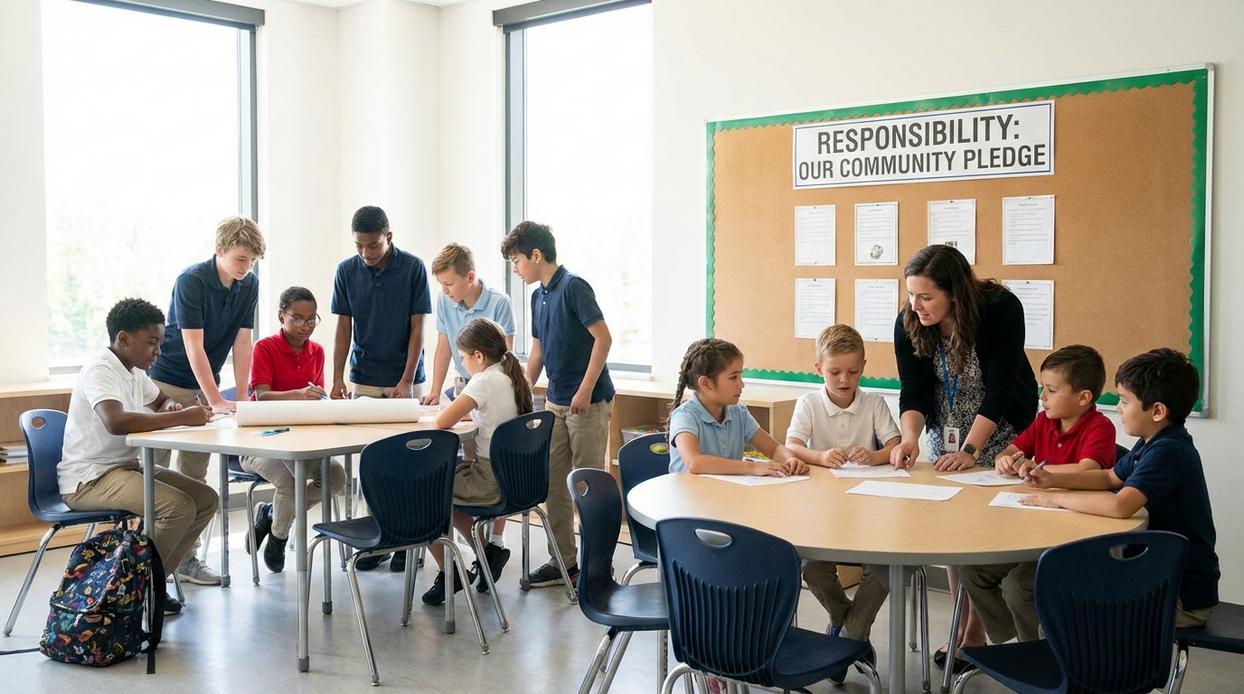
When it comes to teaching kids responsibility, most advice says “start early and pile it on.” I disagree. More tasks don’t automatically build character. The right tasks at the right stage do.
Toddlers (Ages 2–3)
Forget chore charts. At this age, responsibility is about participation, not perfection. Think:
- Putting toys in a bin
- Placing their cup on the counter
- Wiping up small spills
These are simple self-care routines—repeated actions that build independence. A toddler who tosses blocks into a basket feels capable (even if half miss). Contrary to popular belief, constant “helping” from adults can slow this growth. Let them struggle a little. That’s the point.
Preschoolers (Ages 4–5)
Now you can introduce multi-step contributions to the family:
- Setting the table
- Feeding a pet
- Matching socks from laundry
Many parents assume kids this age are “too little” for real chores. But research from the University of Minnesota suggests early household involvement predicts later success in adulthood. Small, consistent duties teach follow-through. (Yes, even if the forks are upside down.)
Early Elementary (Ages 6–8)
This stage is about ownership and delayed gratification—waiting for a reward after effort.
- Making their bed daily
- Packing their school lunch
- Washing vegetables for dinner
Some argue kids should “just focus on school.” I’d counter that managing personal spaces builds executive function—skills like planning and task initiation (Harvard Center on the Developing Child). Pro tip: Resist redoing their work immediately; improvement comes with repetition.
Tweens (Ages 9–12)
Now we shift to planning and foresight:
- Managing homework schedules
- Taking out household trash
- Saving allowance for a desired item
This is where responsibility feels less cute and more real. Think of it as their “training montage” phase—Rocky, but with math homework. Responsibility isn’t about control. It’s about gradually handing it over.
How to Turn “Have-To” into “Want-To”: Fostering Internal Motivation
Internal motivation simply means doing something because you want to, not because someone is forcing you. In other words, the drive comes from inside. That distinction matters more than we think. When kids feel ordered around, they often resist. However, when they feel involved, they usually step up.
First, frame tasks as teamwork. Saying, “Can you help me get dinner ready?” feels different from “Do your chore.” The first invites contribution; the second implies obligation. Language shapes perception (and perception shapes behavior).
Next, give choices—not commands. Limited options like “Do you want to set or clear the table?” create autonomy. Autonomy means having control over decisions, even small ones. Research shows children are more cooperative when they feel a sense of control (American Psychological Association).
Also, focus on effort, not perfection. When you praise trying—“You worked hard on that!”—you reinforce persistence. Re-doing their work immediately can quietly signal, “You didn’t do it right.” Over time, that dampens motivation.
Then, explain the why. Connecting actions to outcomes—“When we tidy up, we have space for a fort tomorrow”—makes the benefit clear. This approach supports teaching kids responsibility in practical, understandable ways.
For more guidance, explore effective communication skills every parent should practice. Pro tip: consistency turns small mindset shifts into lasting habits.
Navigating Pushback and Building Consistency
When it comes to teaching kids responsibility, clarity beats chaos. Consider the “When–Then” strategy versus open-ended warnings. A: “When you finish homework, then you can have screen time.” B: “If you don’t do your homework, you’re in trouble.” Option A is structured and predictable; Option B invites debate (and dramatic sighs). The first builds cause-and-effect thinking—a child understands that a specific action unlocks a specific reward.
Now compare natural consequences with repeated reminders. If dirty clothes miss the hamper, the favorite shirt isn’t clean. That’s not punishment; it’s reality in action. In contrast, constant rescuing teaches kids someone else will manage the fallout.
Finally, routines versus daily negotiations. Embedding chores into a set schedule—like Saturday morning tidy-ups—turns friction into habit. Consistency reduces conflict because expectations stop feeling optional. Pro tip: post routines visually so kids can “own” the checklist instead of arguing about it.
Raising Capable, Confident Kids Starts Today
You came here looking for practical ways to guide your child toward greater independence and positive behavior. Now you have clear, actionable strategies you can start using right away. When kids lack structure and accountability, daily routines turn into constant reminders, frustration builds, and confidence quietly shrinks. That’s why teaching kids responsibility isn’t just about chores—it’s about shaping capable, resilient young people who believe in themselves.
Start small. Assign age-appropriate tasks. Stay consistent. Praise effort over perfection. These simple actions compound into lifelong habits.
If you’re feeling overwhelmed by power struggles, unfinished tasks, or constant pushback, don’t wait for things to “phase out.” Get expert-backed parenting strategies that actually work. Thousands of parents trust Llblogkids for practical, real-world guidance that fits into busy family life.
Take the next step today—explore more parenting tools, apply one strategy this week, and begin building a home where responsibility grows naturally and confidently.