
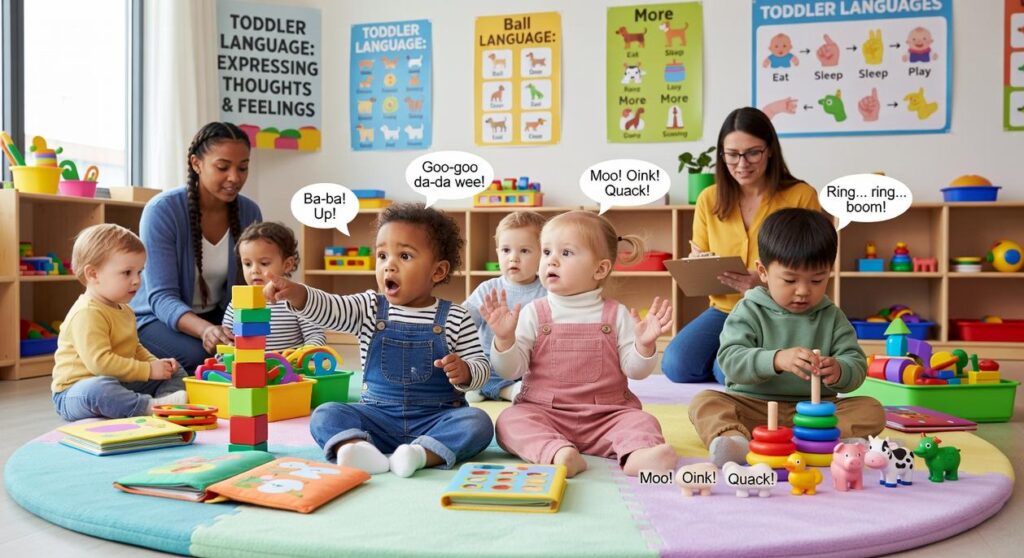
If you’re searching for clear guidance on language development stages, you likely want to understand what’s normal, what to expect next, and how to actively support your child’s communication skills. From first coos to full sentences, each stage builds the foundation for confident expression, social connection, and lifelong learning.
This article breaks down language development stages in a simple, practical way—so you can recognize key milestones, spot potential delays, and use everyday moments to encourage growth. We draw on established child development research and evidence-based early learning practices to ensure the information is accurate, up-to-date, and parent-friendly.
Whether you’re supporting a toddler just starting to form words or a preschooler expanding their vocabulary, you’ll find actionable tips and clear explanations to help you nurture strong communication skills with confidence.
The Pre-Linguistic Stage (0-12 Months): More Than Just Cries
The pre-linguistic stage (0–12 months) is when babies communicate before using real words. In other words, those coos, gurgles, and repetitive babbles like “ba-ba-ba” aren’t random noise—they’re practice. Think of it as vocal warm-ups before the main performance. These early sounds strengthen mouth muscles and teach babies how conversation feels: pause, respond, repeat.
At the same time, babies are building receptive language, which means the ability to understand words, tone, and meaning before speaking. For example, your baby may not say “milk,” but they’ll kick excitedly when they hear it. They’re absorbing far more than they can express (like tiny sponges with opinions).
Key milestones during this period include responding to their name, recognizing familiar voices, understanding simple commands like “no,” and using gestures such as waving. These small moments are actually major steps in the language development stages.
So, how can parents help? First, use parentese—that sing-song, exaggerated tone adults naturally use with babies. Research shows it supports language growth (Harvard Center on the Developing Child). Next, narrate daily routines: “I’m putting on your blue socks!” Over time, these simple habits lay a powerful foundation. For more language development tips, explore related resources.
First Words and Early Vocabulary (12–18 Months): The Naming Explosion
Between 12 and 18 months, many toddlers enter the holophrastic stage—a phase where one word carries the weight of a full sentence. When your child says “Up!” they likely mean, “Pick me up right now.” “Milk” might translate to, “I’m thirsty, and I want my cup.” It’s efficient, passionate, and surprisingly clever.
Around 18 months, many children experience a vocabulary explosion. Words seem to multiply overnight (almost like popcorn in a microwave). Researchers have linked this surge to rapid brain growth and stronger word-object associations (Harvard Center on the Developing Child).
Key Milestones (12–18 Months)
- Saying first words beyond “mama” or “dada”
- Pointing to familiar objects when named
- Building a vocabulary of 10–50 words
If your child isn’t hitting 50 words yet, don’t panic. Language development stages vary widely, and some children focus more on motor skills before words.
Actionable Tip for Parents
Read simple board books daily and play naming games like, “Where is your nose?” Pause to let your child respond. Repetition strengthens neural pathways (American Academy of Pediatrics). Pro tip: Follow your toddler’s interests—naming what they notice boosts engagement and memory.
Simple Sentences and Rapid Growth (18-24 Months): Putting It All Together
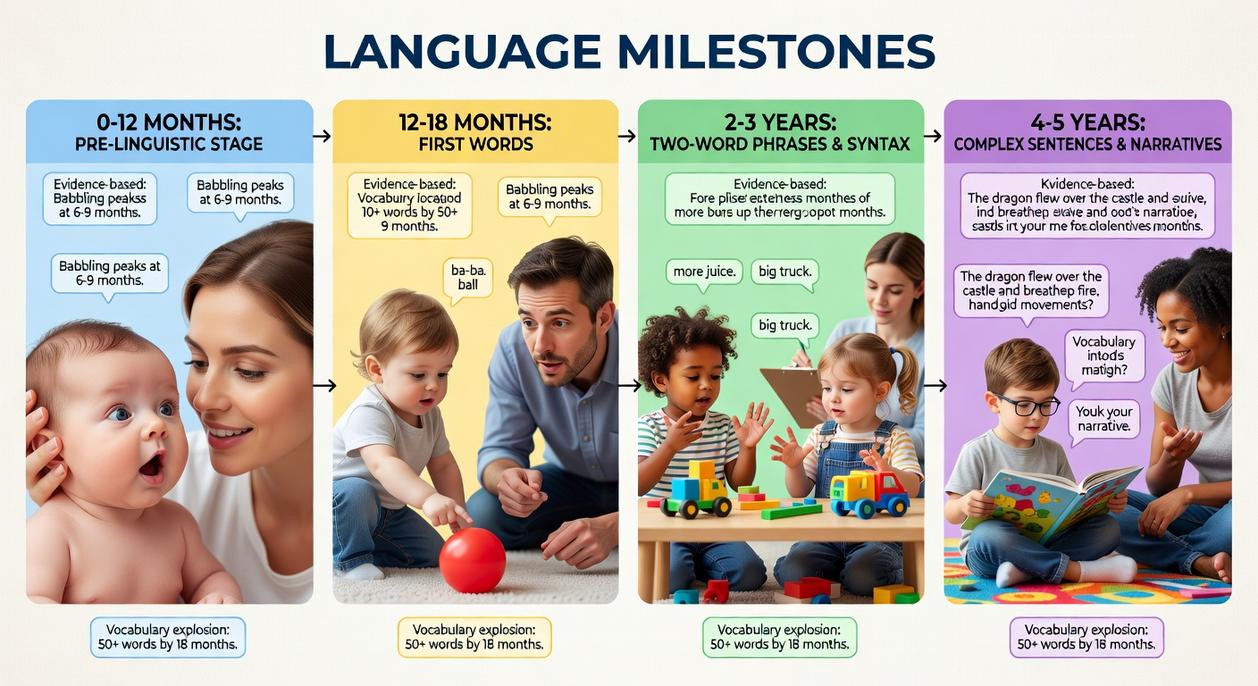
Between 18 and 24 months, toddlers enter one of the most exciting phases of language development stages. This is when telegraphic speech appears—a term that describes two-word combinations like “More juice” or “Doggie go.” Think of it like a text message without the extra fluff (efficient, but adorable). Linguists call it “telegraphic” because, like old telegrams, toddlers keep only the most essential words.
Research shows that by 24 months, many children have a vocabulary of 50–200+ words and begin combining them into simple phrases (American Speech-Language-Hearing Association, 2023). At the same time, their comprehension leaps forward. For example, a child who once followed “Get your shoes” may now handle a two-step direction like, “Get your shoes and bring them to me.” That jump signals growing working memory and processing skills.
You may hear early questions like “What’s that?”—a clear sign curiosity is driving vocabulary growth. And yes, it can feel like a nonstop commentary track.
Actionable Tip: Use Expansion. When your child says, “Car go,” respond with, “Yes, the big red car is going fast!” This technique models grammar and new vocabulary naturally.
Pro tip: Repeat expansions consistently—children learn best through frequent, meaningful exposure.
Developing Complex Language (2-3 Years): The Little Conversationalist
Between ages two and three, your toddler’s speech transforms from scattered puzzle pieces into a clearer picture. Think of it like upgrading from single Lego blocks to full mini structures—suddenly, ideas connect. During language development stages, this is when grammar blossoms: plurals (“dogs”), past tense (“played”), and pronouns (“I,” “me,” “you”) begin clicking into place.
Their words also become more intelligible to strangers—not just patient grandparents who’ve learned the “family dialect.” Research shows that by age three, unfamiliar listeners can understand about 75% of a child’s speech (American Speech-Language-Hearing Association).
Key Milestones (2-3 Years):
- Speaking in three- to four-word sentences
- Engaging in simple back-and-forth conversations
- Correctly using pronouns like “I,” “me,” and “you”
Some argue grammar drills speed this up. But conversation—not correction—is the real engine. Pro tip: ask open-ended questions like, “What was your favorite part of the park today?” For more context, visit social skills growth whats typical and whats not.
Waiting for your child’s first words can feel like holding your breath. Is “mama” coming soon? Should they be saying more? This guide solves that worry by mapping clear, stage-by-stage language development from birth to age three, so you can see what’s typical and what’s not.
Research shows most babies say their first word around 12 months, and by age two, many use 50 or more words (American Academy of Pediatrics). However, variation is normal.
Understanding language development stages helps you track progress, spot delays early, and support growth with simple, daily conversations and reading routines at home and beyond.
Nurturing Your Child’s Voice
Understanding language development stages empowers you to move from worry to confidence. After all, while every child grows at a unique pace, milestones offer a steady roadmap (not a stopwatch).
Instead of guessing, try this simple plan:
- Talk through daily routines—describe what you’re cooking, folding, or noticing.
- Read aloud for ten minutes and pause to ask open questions.
- Listen fully; echo back new words your child attempts.
For example, if they say “dog,” you can add, “Yes, a big brown dog!” (Expansion builds vocabulary.)
Most importantly, keep interactions warm and consistent. In fact, brief chats during car rides count.
Celebrate each small step, because progress compounds. And if concerns linger, consult a pediatrician or speech-language pathologist — a proactive, loving choice that supports your child’s well-being. Remember that early support often shortens challenges and strengthens family communication for years to come. Trust your instincts.
Helping Your Child Thrive Through Every Word and Milestone
You came here looking for clarity about how to support your child’s communication growth—and now you have a clearer understanding of the language development stages and what they mean for your little one. From first sounds to full sentences, each step plays a powerful role in shaping confidence, learning, and connection.
If you’ve been worried about whether your child is “on track,” you’re not alone. Watching for missed words, unclear speech, or slower progress can feel overwhelming. The good news? With the right strategies, encouragement, and daily habits, you can actively support healthy communication and make learning feel natural and fun.
Don’t wait and wonder. Start using these practical techniques today—read together, talk often, and create language-rich moments in everyday routines. If you want trusted, parent-focused guidance that simplifies child development and gives you clear next steps, explore more of our expert-backed resources now. Join thousands of parents who rely on us for proven strategies that turn uncertainty into confident action. Your child’s voice is growing—help it flourish starting today.