If you’re searching for easy science experiments for kids that are fun, educational, and simple to set up at home, you’re in the right place. Parents and caregivers often want hands-on activities that spark curiosity without requiring complicated materials or hours of preparation. This article is designed to meet that need—offering practical, age-appropriate experiments that encourage critical thinking, creativity, and a love of discovery.
We’ve carefully reviewed child development research and early learning best practices to ensure each activity supports key cognitive and motor skills while remaining safe and engaging. Every experiment included here is selected with both learning outcomes and real-life parenting constraints in mind.
Whether you’re looking to fill a rainy afternoon or introduce basic science concepts in a playful way, you’ll find clear guidance, simple instructions, and meaningful educational value throughout this guide.
Sparking Curiosity: Simple Science Fun at Home
Finding activities that pull kids off screens in places like rainy Seattle afternoons or sweltering Texas summers isn’t easy. Many parents assume you need pricey STEM kits or a chemistry degree. Not true.
This guide solves that with easy science experiments for kids using pantry staples—baking soda, vinegar, food coloring.
• Low mess
• Budget friendly
• Step-by-step instructions
Grounded in child development research (hands-on play boosts retention, APA), these projects build critical thinking. Some argue screens teach coding. Sure—but nothing beats a fizzy volcano erupting on your kitchen counter (trust me). Start today with confidence.
Amazing Reactions: Kitchen Chemistry
Science doesn’t always need a lab coat and bubbling beakers. Sometimes, it just needs your kitchen counter. In fact, some of the most easy science experiments for kids happen with ingredients you already have at home.
Project 1: The Fizzing Volcano
Materials: baking soda, vinegar, a bottle, and play-doh.
First, shape the play-doh around the bottle like a tiny mountain. Then add baking soda inside and pour in vinegar. Boom—foamy lava! What’s really happening? Baking soda is a base, and vinegar is an acid. When they mix, they react and create carbon dioxide gas. Think of it like shaking up a soda bottle—the gas needs somewhere to go, so it rushes out in fizzy bubbles. It’s chemistry’s version of a surprise party (just louder and messier).
Project 2: Magical Color-Changing Milk
Materials: milk, a shallow dish, food coloring, and dish soap.
Next, pour milk into the dish and add drops of food coloring. Touch the surface with soapy cotton. Suddenly, the colors swirl like a tie-dye concert shirt. Milk has surface tension, which acts like a tight trampoline holding everything steady. Soap breaks that tension, popping the surface “net,” so the colors race around.
Project 3: Homemade Slime
Materials: clear glue, contact lens solution (with boric acid), baking soda.
Finally, mix the ingredients to create slime. Glue contains polymers—long, flexible chains, like cooked spaghetti. The contact solution links those chains together, turning liquid into stretchy slime. It’s like building tiny bridges between noodles, making a wiggly web you can hold.
Everyday Physics: Making Things Move & Float
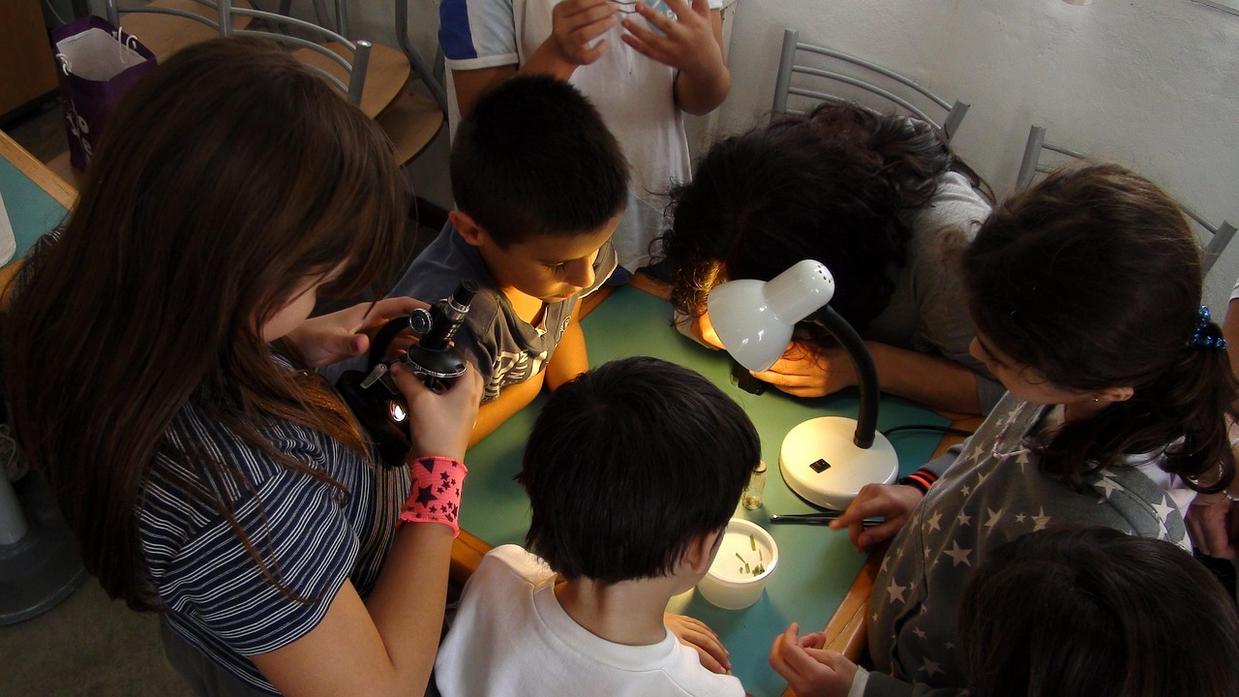
Physics isn’t just formulas on a chalkboard—it’s the reason toast pops, boats float, and superheroes (almost) fly. Instead of memorizing definitions, let’s explore through hands-on building and observation. These easy science experiments for kids turn ordinary kitchen items into mini laboratories.
Project 1: The Floating Egg
Materials: Tall glass, water, salt, egg
First, place the egg in plain water. It sinks. Why? Because of density—the amount of matter packed into a space. When you stir salt into the water, you increase the water’s density. Eventually, the egg floats because the saltwater becomes denser than the egg (the Dead Sea works the same way; its high salinity makes swimmers bob effortlessly—U.S. Geological Survey).
Some argue this is just a “cool trick.” However, understanding density explains ship design and even how hot air balloons rise.
Project 2: Build a Marshmallow Catapult
Materials: Popsicle sticks, rubber bands, bottle cap
Stretching the sticks stores potential energy (stored energy). When released, it becomes kinetic energy (energy of motion), launching the marshmallow. Think of it like pulling back a slingshot in a cartoon—minus the coyote.
Critics might say kids won’t grasp energy transfer. Yet seeing motion happen instantly bridges that gap far better than diagrams. Pro tip: Measure launch distance to introduce simple data tracking.
Project 3: The Unpoppable Balloon
Materials: Balloon, wooden skewer, vegetable oil
Carefully push an oil-coated skewer through the balloon’s thick top and bottom. It won’t pop because polymer chains (long, stretchy molecules in rubber) spread the pressure instead of tearing (American Chemical Society).
At first glance, it seems impossible. But that surprise? That’s curiosity in action. And curiosity, after all, is how to encourage a growth mindset in children (https://llblogkids.com.co/how-to-encourage-a-growth-mindset-in-children/).
Biology in a Jar: Watching Life Grow
Science feels magical when kids can see it happening. In fact, studies show hands-on learning improves retention by up to 75% compared to lecture alone (National Training Laboratories). That’s why jars, seeds, and even shaving cream can turn a kitchen table into a mini lab.
First, try sprouting seeds on a windowsill. Place damp cotton balls inside a clear jar, tuck in a few bean seeds, and set it in sunlight. Within days, you’ll notice germination—the process where a seed absorbs water, swells, and begins to grow roots and a shoot. Plants need water, light, and air to make their own food through photosynthesis. As roots stretch downward and stems reach up, kids witness real evidence of life cycles in action (way cooler than a textbook diagram).
Next, create a rain cloud. Fill a jar with water, top it with shaving cream, and slowly drop blue food coloring onto the “cloud.” When the foam becomes saturated, colored drops fall like precipitation. This models how real clouds release rain once they hold too much water.
Simple, visual, and memorable, these easy science experiments for kids build curiosity—and that curiosity is where lifelong learning begins.
How to Be a Great Science Guide for Your Child
In my opinion, being a great science guide isn’t about knowing all the answers—it’s about staying curious alongside your child. First, ask open-ended questions. Instead of jumping in with explanations, try, “What do you think will happen next?” or “Why do you think it did that?” This builds critical thinking (and honestly, their guesses are sometimes wildly creative).
Next, embrace the process, not perfection. Science is experimentation—meaning trial, error, and yes, a little mess. When kids explore through easy science experiments for kids, the real win isn’t a perfect result; it’s the “aha” moment. I’d argue a spilled cup of baking soda is a small price for genuine discovery.
Finally, connect it to the real world. After a floating egg experiment, talk about cargo ships. Link a baking soda volcano to real eruptions they’ve seen on TV. Suddenly, science isn’t just an activity—it’s everywhere. And that’s when curiosity really sticks.
Your Next Step Starts Now
You were looking for simple, meaningful activities—and you found them. Fun and learning can coexist. It’s tough to choose projects that entertain and educate, but easy science experiments for kids prove discovery is everywhere.
- Pick one experiment and try it this weekend with your child.
Keep the Curiosity Growing at Home
You came here looking for simple, meaningful ways to spark curiosity and make learning exciting for your child. Now you have practical ideas, clear guidance, and confidence to turn everyday moments into powerful learning experiences.
When kids say they’re bored or lose interest quickly, it can feel frustrating and exhausting. You want activities that are fun, educational, and easy to set up — without hours of prep or expensive supplies. That’s exactly why easy science experiments for kids can be such a game changer. They transform ordinary afternoons into hands-on discoveries that build confidence, creativity, and critical thinking.
The next step is simple: choose one activity and try it this week. Keep it light. Stay curious. Let your child ask questions and explore.
If you want more parent-tested ideas that make learning feel like play, explore our full collection of easy science experiments for kids and child development tips. Thousands of parents trust our strategies to turn everyday moments into meaningful growth. Start today and make learning the best part of your child’s day.