If you’re searching for clear, practical guidance on supporting your child’s growth, you’re in the right place. Parenting in the early years can feel overwhelming—especially when you’re trying to nurture milestones, encourage learning, and build strong emotional foundations all at once. This article is designed to give you straightforward, research-backed strategies that help you confidently support your child’s development at home.
We focus especially on early language development in toddlers, along with essential toddler care tips, learning pathways, and everyday routines that strengthen cognitive and social skills. You’ll find actionable advice rooted in child development research and informed by established best practices in early childhood education.
Our goal is simple: to translate expert knowledge into practical steps you can use immediately. Whether you’re encouraging first words, building healthy habits, or fostering curiosity, this guide will help you make informed, confident decisions that support your child’s growth every day.
Few moments compare to hearing your child’s first word. From coos to babbles, each new sound feels like magic in the making. Yet alongside that joy often comes a quiet worry: Is my child’s speech development on track?
To help, this guide offers a clear, age-by-age roadmap from birth to three, grounded in established research from sources like the CDC. You’ll learn what sounds, gestures, and words typically emerge—and when to seek support. Understanding early language development in toddlers empowers you to respond confidently. Pro tip: Talk, read, and sing daily; repetition builds strong neural pathways. Trust the process ahead.
The First Year: The Foundation of Communication (0–12 Months)
The first year isn’t just adorable—it’s architectural. You’re building the blueprint for early language development in toddlers long before real words appear.
0–3 Months: The Music of Connection
At this stage, communication is all about pre-linguistic sounds—coos, gurgles, and those fleeting baby smiles. Babies learn by absorbing the rhythm, tone, and melody of your voice (yes, even your off-key lullabies). Research shows infants prefer child-directed speech—the sing-song “parentese” style—because it supports language processing (Kuhl et al., 1997). So lean in: talk during diaper changes, narrate feedings, and make eye contact often. Pro tip: pause after you speak, as if expecting a reply. This teaches conversational turn-taking surprisingly early.
4–7 Months: Babble Boot Camp
Next comes repetitive babbling—“bababa,” “dadada.” Babies experiment with pitch and volume to show excitement or frustration. Encourage this by imitating their sounds. Think of it as verbal tennis: they “serve,” you “return.” This back-and-forth strengthens neural pathways tied to speech (Harvard Center on the Developing Child).
8–12 Months: Words with Meaning
Finally, real words often emerge—usually “mama” or “dada.” More importantly, comprehension explodes. They respond to their name and understand simple commands like “no.” Be clear and consistent. Label objects daily. Read simple books. And celebrate attempts, not perfection (every “ba!” counts).
The Toddler Word Explosion: Milestones from 1 to 2 Years
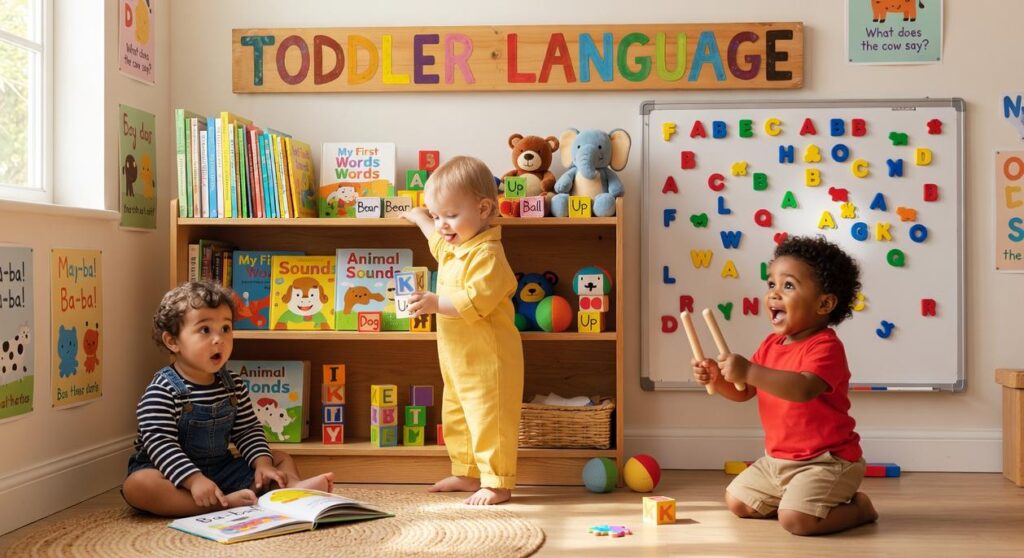
Between 12 and 18 months, most toddlers enter what experts call the one-word stage. In simple terms, this means your child typically uses single words to express whole ideas. Vocabulary often ranges from 5 to 20 words, though some children may have fewer or many more (and both can be completely normal). Beyond the classic “mama” and “dada,” common first words include ball, dog, bye-bye, milk, and up.
At the same time, gestures do a lot of heavy lifting. Pointing, reaching, or shaking their head “no” helps toddlers fill communication gaps. For example, a child might point to the fridge and say “milk,” meaning, “I want milk now.” According to the American Academy of Pediatrics, gestures are a strong predictor of later language skills (AAP, 2023).
However, some argue that comparing word counts creates unnecessary anxiety. After all, kids develop at different speeds. That’s true. Yet tracking early language development in toddlers helps identify potential delays early, when support is most effective.
Then, almost suddenly, 18 to 24 months brings the vocabulary boom. Toddlers may learn new words daily. More importantly, they begin combining two words into simple phrases like “more milk” or “all gone.” This signals a cognitive leap: they’re starting to understand relationships between objects and actions.
Looking ahead, researchers speculate that increased exposure to conversational turn-taking (even over video calls) may accelerate future language gains (Harvard Center on the Developing Child, 2022). In other words, those silly back-and-forth chats? They matter more than you think.
Building Conversations: Language Development from 2 to 3 Years
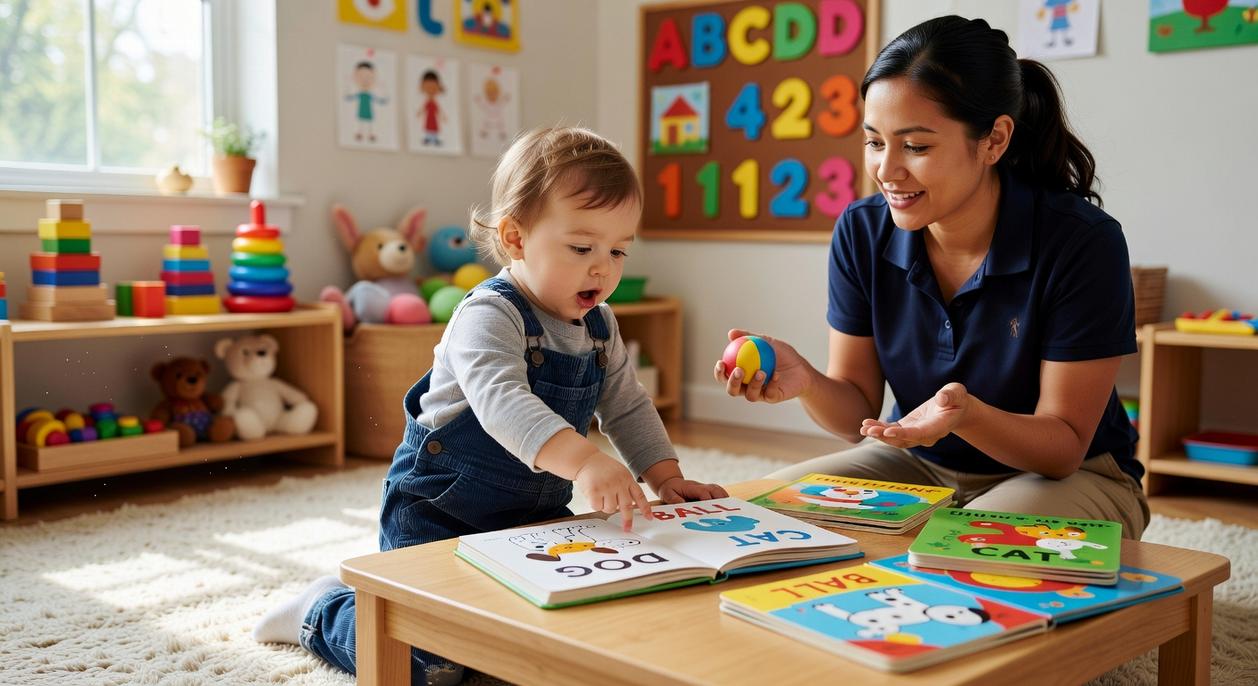
Between ages two and three, children make remarkable strides in early language development in toddlers. Most expand their vocabulary to 200 or more words, confidently naming common objects like “cup,” “dog,” or “car.” (Yes, even the random rock they insist on bringing home.) This word explosion helps reduce frustration because they can finally say what they mean instead of melting down.
Some parents worry if their child isn’t constantly talking. That’s fair. But language growth isn’t just about quantity—it’s about steady progress. If your toddler is adding new words monthly and understanding more, that’s a strong sign they’re on track.
You’ll also notice a shift to three- and four-word sentences like “I want juice” or “Mommy go work.” Pronouns such as I, me, and you start appearing, along with simple “what” and “where” questions. (Brace yourself for many “Why?” questions next.)
Speech becomes clearer, and unfamiliar adults can understand much of what they say. They can follow two-step directions like, “Get your shoes and bring them to me,” showing stronger comprehension.
Pro tip: Support growth through daily conversation during routines like meals—nutrition and talk go hand in hand. For guidance, review toddler nutrition basics what to serve and when.
Supporting Your Child’s Journey: When to Check In
Every child grows at their own rhythm (yes, even siblings in the same house). Still, having gentle guideposts can help you feel grounded. Development is a range, not a race.
When it comes to early language development in toddlers, most little ones follow similar patterns. You might consider a check-in if you notice:
- Not babbling by 12 months
- Not using single words by 16 months
- Not combining two-word phrases by age 2
- Speech that isn’t easily understood by age 3
Some argue that “they’ll grow out of it” (and sometimes they do). But waiting without guidance can delay helpful support. The American Academy of Pediatrics notes that early identification improves outcomes (AAP, 2023).
If something feels off, trust that instinct. A pediatrician or speech-language pathologist can offer reassurance, screening, or next steps. Think of it not as overreacting—but as showing up early and lovingly.
Every child moves at their own pace, and understanding the stages of early language development in toddlers helps you respond with confidence instead of worry. When you know what’s typical, you can guide rather than guess.
Here’s what I recommend:
• Narrate your day as you cook, shop, or drive.
• Read together DAILY, even if it’s the same book.
• Sing simple songs with repetition.
• Pause, listen, and respond to every babble or word.
Consistency matters more than perfection. You are your child’s MOST IMPORTANT teacher. Talk, connect, repeat—every single day. Small moments create BIG lifelong impact together.
You came here looking for clear, practical ways to support your child’s growth—and now you have them. From building daily routines to encouraging curiosity and connection, you’ve seen how small, intentional actions can make a powerful difference in your child’s confidence and communication.
If you’ve ever worried about whether you’re doing enough, you’re not alone. Supporting early language development in toddlers can feel overwhelming, especially when milestones seem to come with pressure and comparison. The good news? Consistency, conversation, and play-based learning truly work. When you understand what your child needs and respond with patience and structure, you create an environment where development happens naturally.
Now it’s time to take action. Start by choosing one strategy you learned today and apply it consistently this week—whether that’s narrating daily activities, reading together every night, or expanding your toddler’s words during conversation. Small steps lead to big progress.
Keep Nurturing Their Growth With Confidence
Your child’s development doesn’t need to feel uncertain or confusing. Get trusted, research-backed parenting strategies designed to ease your worries and support real progress. Join thousands of parents who rely on proven toddler learning insights and practical guidance. Explore more expert-backed resources now and give your child the strong start they deserve.