If your child gives up easily, avoids challenges, or fears making mistakes, you’re not alone. Many children develop a fear of failure that quietly shapes how they approach school, friendships, and new experiences. The good news? You can change that. This guide shows you practical, everyday strategies to build a growth mindset for children—one that helps them see effort as strength and mistakes as learning opportunities. Inside, you’ll find simple phrases, supportive actions, and small environmental shifts that encourage resilience, confidence, and persistence, giving your child the tools to embrace challenges and grow stronger through them.
Growth vs. Fixed: Understanding the Two Core Mindsets
Inspiring a growth mindset in children involves simple yet effective strategies that can be further enhanced by exploring fun family activities, as discussed in our article “Hacks Whatutalkingboutfamily.
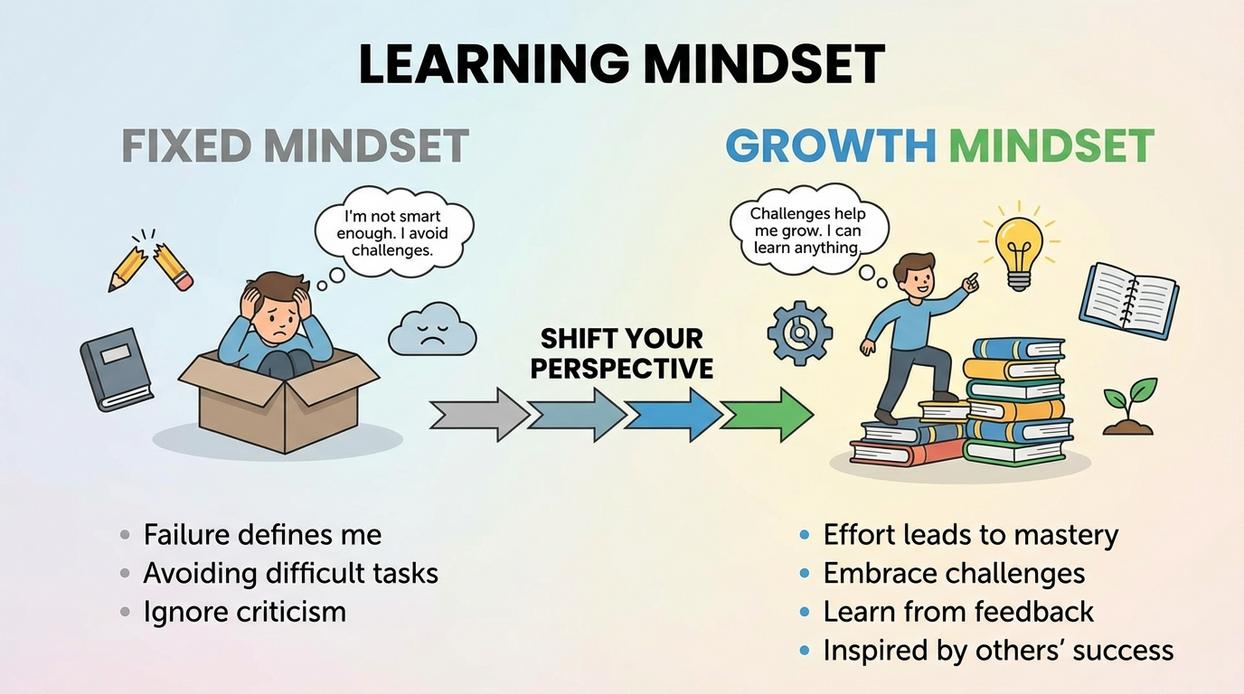
Psychologist Carol Dweck’s research shows that how children think about ability directly affects achievement (Dweck, 2006). She identified two core mindsets.
Fixed Mindset is the belief that intelligence and talent are static traits—you either “have it” or you don’t. Children with this view often avoid challenges to protect their image. If failure equals being “not smart,” why risk it? In one study, students praised for intelligence were more likely to give up after difficulty (Mueller & Dweck, 1998). They focused on proving themselves rather than improving themselves.
Growth Mindset is the belief that abilities develop through effort, strategy, and support. This creates resilience and curiosity. A child practicing piano despite mistakes understands that skills grow with time.
Real-world difference:
- “I’m bad at math.”
- “I need to practice this math problem more.”
That simple shift embodies growth mindset for children—and research shows it boosts motivation and long-term performance.
The Parent’s Playbook: Phrases That Nurture Resilience
Have you ever wondered why some kids bounce back after a setback while others shut down? Often, it comes down to the words they hear at home.
1. Focus on Process, Not Just Results
When we praise only outcomes, kids may tie their worth to performance. Instead, spotlight effort and strategy.
Say This — Not That
- Instead of: “You’re so smart!”
Try: “I love how you kept trying different strategies to solve that puzzle.” - Instead of: “You got an A, great job!”
Try: “You studied so effectively for that test. Your hard work really paid off.”
See the shift? One labels the child. The other highlights actions they can repeat. Which do you think builds lasting confidence?
2. The Power of “Yet”
When your child says, “I can’t do this,” gently add one small word: yet.
“I can’t do this… yet.”
That tiny addition keeps the door open. It turns a dead end into a work in progress (and who doesn’t need that reminder sometimes?).
3. Model the Language Yourself
Children listen closely to how you handle frustration. Try saying, “This new recipe is tricky, but I’m going to figure it out.” You’re showing problem-solving in real time.
If we want growth mindset for children, we have to speak it, live it, and repeat it daily. Sound familiar?
Small language shifts create big internal changes. The question is: what phrases will you start using today?
Transforming Mistakes into Learning Opportunities
Mistakes feel big in the moment. Spilled milk. A failed spelling test. A forgotten homework sheet. However, what if we treated these moments as data instead of disasters? Reframing failure as feedback means viewing each misstep as useful information for the next attempt (yes, even the great cereal flood of 2026).
Instead of rushing to fix things, pause and ask guiding questions. Try: What did we learn from that? or What could we try differently next time? These questions shift the focus from blame to problem-solving. Over time, this builds resilience and supports a growth mindset for children.
Consider this simple framework:
| Mistake | Guiding Question | Next Step |
|---|---|---|
| Spills milk | What made it tip? |
Use two hands |
| Misses math problem | Where did it get tricky? | Practice that step |
Meanwhile, celebrate the “aha!” moment. Research shows that praising effort and strategy increases persistence (Dweck, 2006). So cheer the breakthrough, not just the outcome.
Equally important, share your own mistakes. Kids who hear adults normalize failure are more likely to take healthy risks (APA, 2020).
Looking ahead—this is speculation—schools may increasingly assess reflection skills, not just grades. In that world, learning how to learn becomes the real superpower. For more hands-on growth, explore exploring nature outdoor learning ideas for families.
Creating a “Challenge-Friendly” Home Environment”
Children build confidence by doing hard things—especially when success isn’t guaranteed. Research from Stanford psychologist Carol Dweck shows that children praised for effort rather than innate ability are more likely to persist after failure (Dweck, 2006). That’s the heart of a growth mindset for children. Let them try the bigger puzzle. Let them wobble on the bike. A scraped knee is often a lesson in resilience (and a rite of passage).
Some argue that too much challenge frustrates kids. True—overwhelm can shut motivation down. But age-appropriate risk, supported by a calm adult, strengthens problem-solving skills and emotional regulation (American Academy of Pediatrics, 2018).
Encourage effort over outcome.
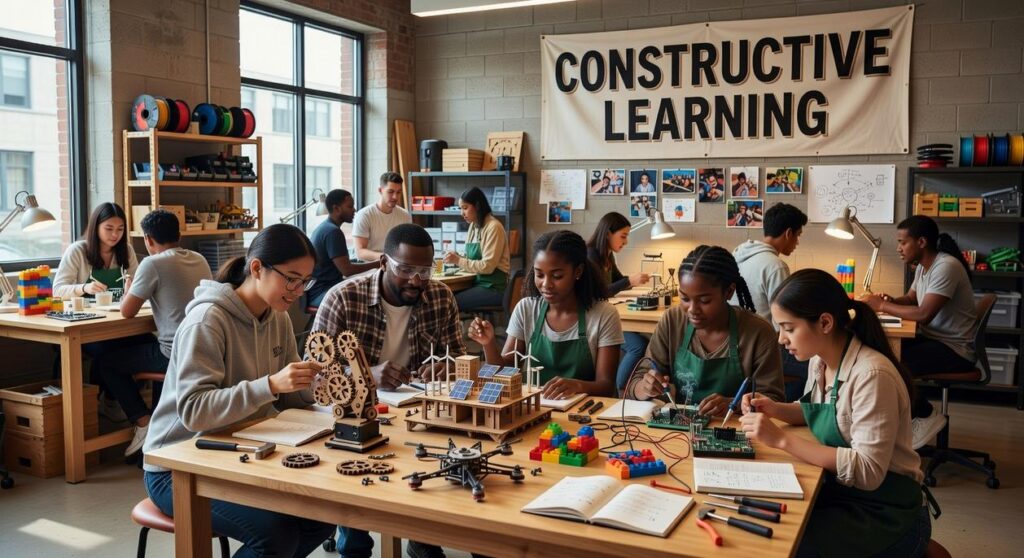
Provide tools that invite experimentation: building blocks for spatial reasoning, science kits for hypothesis testing, and open-ended art supplies for creative confidence. A 2020 LEGO Foundation study found playful learning boosts critical thinking and adaptability.
Set “stretch goals”—small targets just beyond comfort. Break “ride a bike” into steps: balance practice, short glides, then pedaling. Progress fuels momentum.
Finally, value questions over quick answers. Curiosity activates deeper learning pathways (Harvard Center on the Developing Child, 2016). When kids ask “why,” pause and explore together. (Yes, even the fifteenth dinosaur question.)
Your Blueprint for Raising a Resilient, Lifelong Learner
By using process-focused language, reframing mistakes as opportunities to learn, and creating a home where challenges are welcomed, you’re laying the groundwork for lasting resilience. These three pillars work together to help your child move past the fear of not being “good enough” and step into a mindset built on effort, curiosity, and growth.
When children stop fearing failure, they start embracing possibility. That confidence changes everything.
If you want to give your child a lifelong advantage, commit today to nurturing a growth mindset for children. It’s one of the most powerful gifts you can offer—setting them up for a future filled with courage, confidence, and continuous learning.

 Ronna Fisheroda writes the kind of child development insights content that people actually send to each other. Not because it's flashy or controversial, but because it's the sort of thing where you read it and immediately think of three people who need to see it. Ronna has a talent for identifying the questions that a lot of people have but haven't quite figured out how to articulate yet — and then answering them properly.
They covers a lot of ground: Child Development Insights, Practical Toddler Care Tips, Kids' Blog-Focused Learning Paths, and plenty of adjacent territory that doesn't always get treated with the same seriousness. The consistency across all of it is a certain kind of respect for the reader. Ronna doesn't assume people are stupid, and they doesn't assume they know everything either. They writes for someone who is genuinely trying to figure something out — because that's usually who's actually reading. That assumption shapes everything from how they structures an explanation to how much background they includes before getting to the point.
Beyond the practical stuff, there's something in Ronna's writing that reflects a real investment in the subject — not performed enthusiasm, but the kind of sustained interest that produces insight over time. They has been paying attention to child development insights long enough that they notices things a more casual observer would miss. That depth shows up in the work in ways that are hard to fake.
Ronna Fisheroda writes the kind of child development insights content that people actually send to each other. Not because it's flashy or controversial, but because it's the sort of thing where you read it and immediately think of three people who need to see it. Ronna has a talent for identifying the questions that a lot of people have but haven't quite figured out how to articulate yet — and then answering them properly.
They covers a lot of ground: Child Development Insights, Practical Toddler Care Tips, Kids' Blog-Focused Learning Paths, and plenty of adjacent territory that doesn't always get treated with the same seriousness. The consistency across all of it is a certain kind of respect for the reader. Ronna doesn't assume people are stupid, and they doesn't assume they know everything either. They writes for someone who is genuinely trying to figure something out — because that's usually who's actually reading. That assumption shapes everything from how they structures an explanation to how much background they includes before getting to the point.
Beyond the practical stuff, there's something in Ronna's writing that reflects a real investment in the subject — not performed enthusiasm, but the kind of sustained interest that produces insight over time. They has been paying attention to child development insights long enough that they notices things a more casual observer would miss. That depth shows up in the work in ways that are hard to fake.