Ready to say goodbye to diapers but not sure where to start? You’re not alone. Many parents feel overwhelmed by potty training, worried about accidents, resistance, and doing it “wrong.” This guide is designed to remove that stress with a clear, step-by-step plan that makes the transition smoother for both you and your toddler. Grounded in proven child development insights and practical strategies that have helped countless families, we break the process down into simple, manageable potty training steps. You’ll find actionable guidance, troubleshooting tips, and the confidence you need to turn this milestone into a positive, empowering experience.
Is Your Toddler Ready? Key Signs to Watch For
Timing really is everything with potty training. Start too early and you may face resistance, tears, and a frustrated toddler (and parent). The key is understanding what “readiness” actually means. Readiness isn’t about age alone—it’s about developmental signals that show your child can physically, mentally, and emotionally handle the change.
Clear Readiness Cues Explained
Physical Signs: Staying dry for at least two hours, having predictable bowel movements, and being able to pull their own pants up and down.
Cognitive Signs: The ability to follow simple instructions (‘go get the ball’), understanding potty-related words, and telling you when they need to go.
Emotional & Behavioral Signs: Showing curiosity about the toilet, expressing a desire for independence, and disliking the feeling of a wet or dirty diaper.
Let’s simplify that. “Predictable bowel movements” just means your child tends to poop around the same time each day. “Understanding potty-related words” means they know what pee, poop, or potty refer to.
• READY
If several of these signs show up consistently, that’s a green light. If only one appears, it may be worth waiting. Pro tip: consistency over a few weeks matters more than one good day.
Setting Up for Success: Your Potty Training Toolkit
Having the right gear on hand can make the process smoother and more engaging for your toddler. Think of it as assembling a tiny “training camp” (minus the whistle).
Choosing a Potty: Discuss the pros and cons of a small, standalone potty chair versus a toilet seat insert. Emphasize making the child feel secure. A standalone potty is lower to the ground, often with back support—great for stability and confidence. A toilet seat insert fits over your regular toilet, saving space and easing the transition later. The key feature? Security. If their feet touch the floor or a step stool, they’ll feel steady—and that reduces fear.
The “Big Kid” Appeal
- Special training pants that feel cool and breathable
- Fun underwear featuring favorite characters
Unlike diapers, these let toddlers feel wetness, reinforcing body awareness (a crucial developmental cue).
Motivation & Reinforcement
Sticker charts, enthusiastic praise, or a special “potty time” book create positive associations. Small, immediate rewards work best because toddlers respond to clear cause and effect.
The 5-Step Method for Successful Toilet Training
Toilet training can feel like one of those parenting milestones everyone has an opinion about. Some swear by intensive three-day methods. Others insist you should “just wait until they’re ready.” The truth? There’s debate here—and I’ll admit, no single approach works for every child. What does help is consistency, patience, and a plan you can actually stick to.
Before we dive in, let’s define a key term: positive reinforcement means rewarding a behavior you want to see again (like sitting on the potty) with praise, encouragement, or small celebrations. According to the American Academy of Pediatrics, positive reinforcement is more effective than punishment in shaping behavior (AAP, HealthyChildren.org).
Here’s the simple framework:
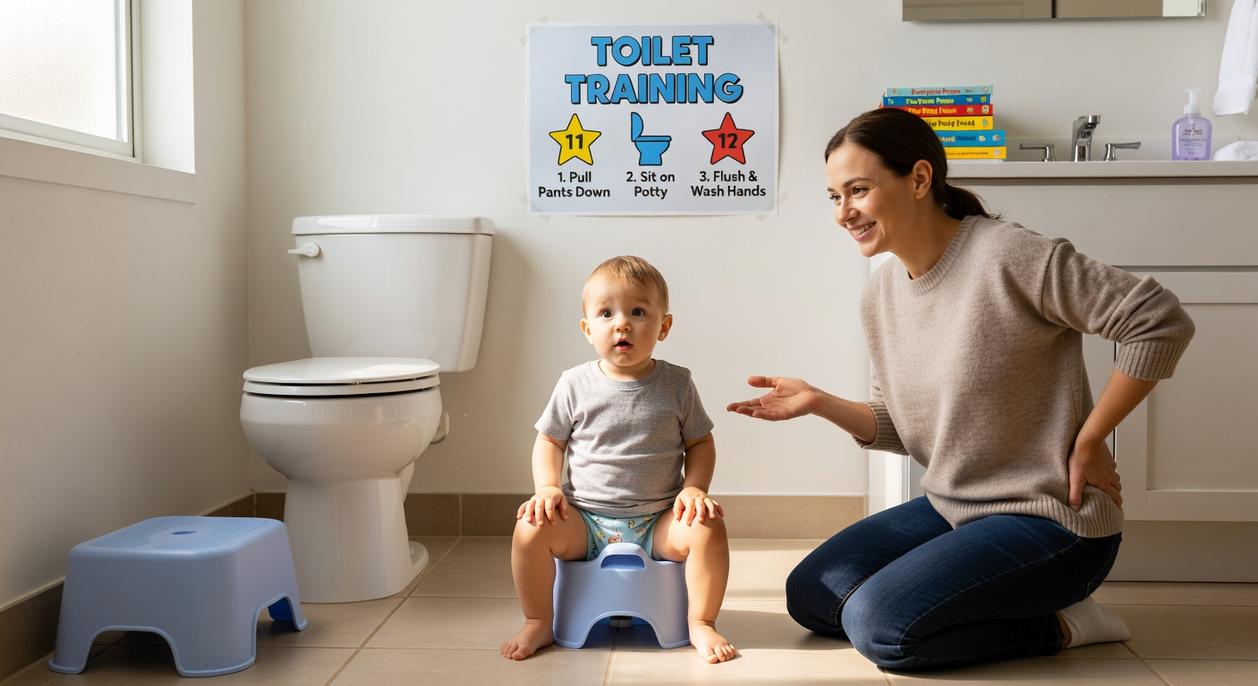
Step 1: Introduce the Potty as a Friend. Place the potty in a visible area. Let your child sit on it fully clothed while reading a book to build comfort and familiarity without pressure.
Step 2: Create a Consistent Routine. Start by having your child sit on the potty at key times every day: first thing in the morning, after meals, and before bath and bedtime.
Step 3: Teach the ‘How-To’. Use simple, clear language to explain the process: pull down pants, sit, try to go, wipe, flush, and wash hands. Model the behavior yourself.
Step 4: Go Diaper-Free (at Home). Dedicate a few days to letting your child wear only pants at home. This helps them connect the urge to go with the need to use the potty.
Step 5: Master Positive Reinforcement. Celebrate every attempt, not just successes. If an accident happens, stay calm and say, ‘That’s okay, pee and poop go in the potty. We’ll try again next time.’
What If It Doesn’t Click Right Away?
Here’s where honesty matters: sometimes, even when you follow every step, progress stalls. That doesn’t mean you failed. It may mean your child isn’t developmentally ready yet. Readiness signs—like staying dry for two hours or showing interest in the bathroom—vary widely (Mayo Clinic).
Accidents are part of the process, not proof of regression. (Yes, even the fifth one before lunch.) Staying calm teaches emotional regulation—a skill just as important as using the potty. If big feelings erupt, strategies from managing toddler tantrums with calm and confidence can help you respond without escalating.
Pro tip: Keep celebrations simple—high-fives beat elaborate rewards. Think encouragement, not a parade.
Some parents argue rewards create dependency. That’s a fair concern. But short-term reinforcement, when phased out gradually, builds confidence rather than entitlement.
At the end of the day, toilet training isn’t a race. It’s a relationship milestone. And like most things in parenting, flexibility often beats perfection.
Navigating Common Roadblocks and Challenges
Every child’s journey is different, and research backs that up. According to the American Academy of Pediatrics, setbacks during toilet learning are common and developmentally normal (AAP, 2023). In other words, bumps in the road don’t mean failure.
-
Handling Accidents Gracefully
Accidents are part of learning. Studies show children respond better to positive reinforcement than punishment, improving long-term skill retention (American Psychological Association). Instead of scolding, calmly say, “Let’s try again next time.” (Yes, even when you’re tired.) -
Dealing with Potty Training Regression
Regression often follows life changes—like a new sibling or starting daycare. Stress disrupts routines, and routines are everything at this stage. Revisit the potty training steps and rebuild consistency. -
When Your Toddler Refuses
Fear of flushing or falling in is real. Child development experts note that gradual exposure reduces anxiety. Take a short break, remove pressure, and reintroduce gently—think baby steps, not boot camp.
Progress, after all, isn’t linear.
Patience, Positivity, and Your Path Forward
You now have a complete, proven roadmap for toilet training your toddler. Progress over perfection: calm consistency beats pressure every time. A stressed approach vs. a steady one? The second builds confidence. Follow the potty training steps, stay patient, and remember small wins matter.
Helping Your Child Take the Next Confident Step
You came here looking for clear, practical guidance to make potty training feel less overwhelming—and now you have a path forward. With the right mindset, realistic expectations, and a consistent routine, potty training doesn’t have to feel like a daily battle.
If you’ve been feeling frustrated by accidents, mixed signals, or resistance, you’re not alone. That uncertainty can make even the most patient parent doubt their approach. The good news is that progress comes from consistency, encouragement, and following the potty training steps you’ve already learned with calm confidence.
Now it’s time to act. Choose a start date, stay consistent with the routine, and respond to setbacks with patience instead of pressure. Small wins build big confidence.
If you want more proven, parent-tested strategies to make toddler milestones easier and less stressful, explore our top-rated parenting resources designed to simplify every stage of early childhood. Start today and turn potty training struggles into confident successes.

 Graciela Robinsonueva writes the kind of child development insights content that people actually send to each other. Not because it's flashy or controversial, but because it's the sort of thing where you read it and immediately think of three people who need to see it. Graciela has a talent for identifying the questions that a lot of people have but haven't quite figured out how to articulate yet — and then answering them properly.
They covers a lot of ground: Child Development Insights, Kids' Blog-Focused Learning Paths, Practical Toddler Care Tips, and plenty of adjacent territory that doesn't always get treated with the same seriousness. The consistency across all of it is a certain kind of respect for the reader. Graciela doesn't assume people are stupid, and they doesn't assume they know everything either. They writes for someone who is genuinely trying to figure something out — because that's usually who's actually reading. That assumption shapes everything from how they structures an explanation to how much background they includes before getting to the point.
Beyond the practical stuff, there's something in Graciela's writing that reflects a real investment in the subject — not performed enthusiasm, but the kind of sustained interest that produces insight over time. They has been paying attention to child development insights long enough that they notices things a more casual observer would miss. That depth shows up in the work in ways that are hard to fake.
Graciela Robinsonueva writes the kind of child development insights content that people actually send to each other. Not because it's flashy or controversial, but because it's the sort of thing where you read it and immediately think of three people who need to see it. Graciela has a talent for identifying the questions that a lot of people have but haven't quite figured out how to articulate yet — and then answering them properly.
They covers a lot of ground: Child Development Insights, Kids' Blog-Focused Learning Paths, Practical Toddler Care Tips, and plenty of adjacent territory that doesn't always get treated with the same seriousness. The consistency across all of it is a certain kind of respect for the reader. Graciela doesn't assume people are stupid, and they doesn't assume they know everything either. They writes for someone who is genuinely trying to figure something out — because that's usually who's actually reading. That assumption shapes everything from how they structures an explanation to how much background they includes before getting to the point.
Beyond the practical stuff, there's something in Graciela's writing that reflects a real investment in the subject — not performed enthusiasm, but the kind of sustained interest that produces insight over time. They has been paying attention to child development insights long enough that they notices things a more casual observer would miss. That depth shows up in the work in ways that are hard to fake.