Parenting in the early years can feel overwhelming, especially when you’re trying to balance daily routines with giving your child the best possible start. You’re likely searching for practical, trustworthy guidance on toddler care, developmental milestones, and simple ways to support your child’s growth at home. This article is designed to meet that need—offering clear, research-informed strategies that align with how young children actually learn and develop.
We draw on established child development research and evidence-based parenting approaches to ensure the guidance you’re reading reflects what experts in early childhood education and developmental psychology recommend today. In particular, we highlight the importance of play in brain development, showing how everyday interactions, exploration, and curiosity fuel cognitive, emotional, and social growth.
By the end, you’ll have actionable tips, age-appropriate learning ideas, and practical insights you can confidently apply to nurture a thriving, curious young mind.
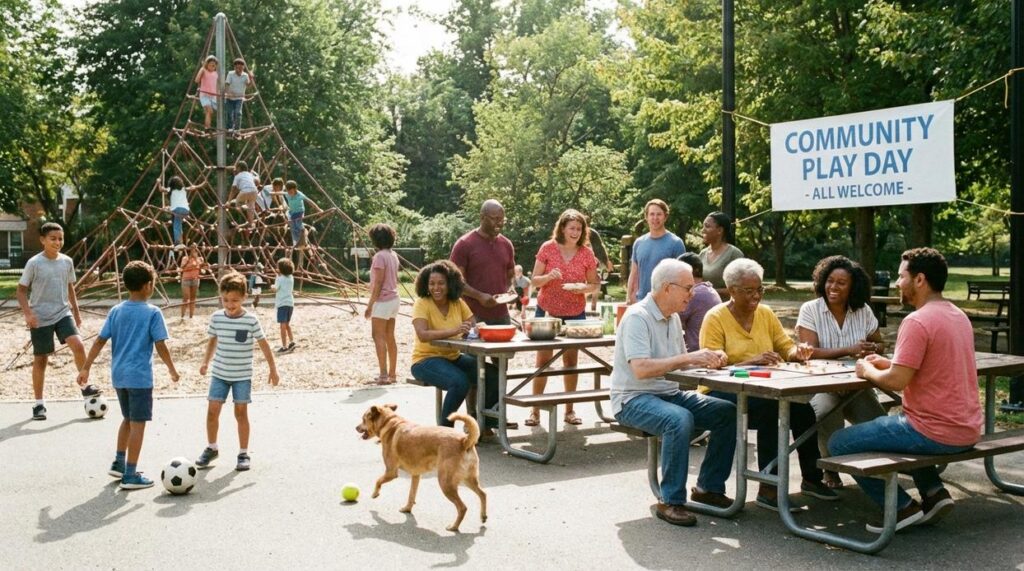
More than giggles and glittery finger paint, play is a child’s most serious job. When blocks clatter on hardwood floors and mud squishes between tiny toes, neurons fire and wire together. Many parents sense play matters, yet few see the invisible architecture forming inside the brain. Decades of child development science and neuroscience reveal the importance of play in brain development shapes memory, language, and emotional resilience. This guide breaks down how roughhousing, pretend tea parties, and sandbox experiments strengthen growing minds, and offers clear, actionable ways to nurture richer, more confident learning. Watch curiosity bloom in bright eyes daily.
The Brain on Play: Building a Better Mind, One Synapse at a Time
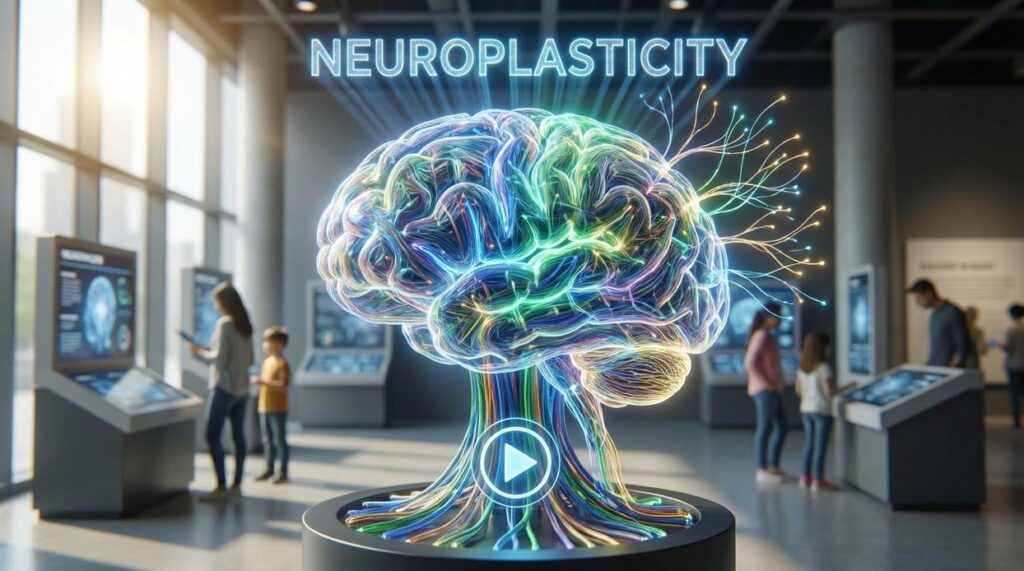
Think of neuroplasticity as your child’s brain hitting the gym. Neuroplasticity means the brain can change and reorganize itself by forming new neural connections. Like a muscle, the more it’s used, the stronger it becomes (yes, even on the days when the “workout” looks like building a pillow fort).
When kids play, billions of tiny connections called synapses fire between brain cells. Play especially activates the prefrontal cortex—the area responsible for planning, decision-making, and self-control. A board game that requires turn-taking or a make-believe restaurant forces the brain to practice strategy and flexible thinking.
Now compare two scenarios:
- Structured adult-led activity: Clear rules, specific outcomes, limited improvisation.
- Unstructured child-led play: Open-ended, unpredictable, driven by curiosity.
Both have value. But in A vs B, unstructured play demands more adaptation. When a tower falls, a child redesigns it. When rules change mid-game, they negotiate. That mental stretching strengthens executive function in ways worksheets simply can’t.
Play also fuels “serve and return” interactions—when a child babbles or shows a toy (the serve) and an adult responds warmly (the return). According to Harvard’s Center on the Developing Child, these exchanges lower cortisol, the stress hormone, and build secure attachment. Lower stress creates optimal conditions for learning.
The importance of play in brain development cannot be overstated. It nurtures:
- Problem-solving skills
- Creativity and innovation
- Emotional regulation
- Resilience under challenge
In short, free play isn’t wasted time. It’s brain architecture in progress (no hard hat required).
The Developmental Playbook: Matching Activities to Brain Growth
Parents often hear that play is “good for the brain.” True—but what does that actually mean? To understand the importance of play in brain development, it helps to break play into categories and connect each one to what’s happening neurologically.
In simple terms, children’s brains grow through experience. Every time a child squishes clay or climbs a jungle gym, neurons (brain cells) fire together. When neurons fire together repeatedly, they form stronger connections—a process called synaptic strengthening. Think of it like building faster highways between brain regions.
Sensory Play: Building the Brain’s Wiring
Sensory play includes activities like sand tables, water bins, or play-doh. These experiences stimulate multiple senses at once, strengthening neural pathways responsible for processing touch, sight, and movement. According to the Center on the Developing Child at Harvard University, repeated sensory experiences help build the architecture of the brain in early childhood. In other words, messy play is actually precision engineering.
Some argue sensory play looks unstructured and unproductive. But that “just playing in mud” moment is laying groundwork for later skills like reading and problem-solving (yes, even future math homework).
Constructive Play: Training Logic and Precision
Constructive play—think blocks or LEGOs—requires planning and spatial reasoning (the ability to understand how objects fit in space). Research published in Child Development links block play to improved mathematical thinking later on. As children stack, balance, and redesign, they’re also refining fine motor skills and logical sequencing.
It may seem like free building lacks direction. However, trial and error is the direction. When a tower falls, the brain recalibrates. That’s engineering in miniature.
Imaginative & Pretend Play: Practicing Perspective
Dress-up and role-playing develop theory of mind—the ability to understand that others have different thoughts and feelings. This directly supports empathy and communication skills. For a deeper look at how these abilities shape long-term outcomes, explore emotional intelligence why it matters in childhood.
When children pretend to be teachers, doctors, or even superheroes (cape optional), they rehearse social scripts. Language expands. Emotional awareness grows.
Physical Play: Fueling Focus and Memory
Running, climbing, and jumping stimulate the motor cortex and increase brain-derived neurotrophic factor (BDNF), a protein that supports memory and learning (Ratey, Spark). Physical activity also improves attention and emotional regulation.
While some worry active play is distracting, movement actually primes the brain for focus. Sometimes the fastest way to better concentration is a lap around the playground.
Playtime isn’t about more toys; it’s about better choices. Think quality over quantity: a focused, distraction-free hour with blocks beats a day of background TV.
Option A: a room packed with flashing gadgets. Option B: a basket of open-ended materials. Research consistently links open-ended play to stronger problem-solving and creativity (American Academy of Pediatrics). That’s the importance of play in brain development. Blocks, art supplies, and even cardboard boxes become castles, rockets, or grocery stores. Single-function electronic toys? They usually do the thinking for your child (fun, but limiting).
Pro tip: Rotate toys weekly to spark fresh ideas.
Next, follow their lead. Scenario A: you direct every move. Scenario B: you observe, then join their story. When kids choose the plot, they build independence and intrinsic motivation (the “I did it!” spark).
Finally, ask What if? instead of giving instructions. What if the dragon turns friendly? What if the bridge needs to hold three cars? Questions deepen imagination and critical thinking. In short, less noise, more wonder. Choose B more often, and watch creativity take the lead. Small shifts in environment create lasting cognitive gains over time. Your presence matters more than any pricey toy ever will. Start small today.
By now, you have a clear map linking everyday play to measurable brain growth. Instead of guessing, you can see how building blocks strengthen problem-solving, how pretend games boost language, and how rough-and-tumble play sharpens emotional regulation. That clarity matters. After all, the biggest pain point for modern parents is uncertainty—wondering if you’re doing enough in a complicated world.
Here’s the upside: when you understand the importance of play in brain development, confidence replaces doubt. You gain a practical lens for decisions and long-term growth. So rather than acting as nonstop entertainers, step into your role—facilitators of essential, brain-building play.
Nurturing Bright, Curious Minds Starts Today
You came here looking for practical ways to support your child’s growth, and now you have a clearer path forward. By understanding how daily routines, intentional learning moments, and especially the importance of play in brain development shape your child’s future, you’re better equipped to nurture confidence, creativity, and resilience.
The early years can feel overwhelming. You want to make sure you’re doing enough — saying the right things, teaching the right skills, creating the right environment. The truth is, small, consistent actions matter most. Play-based learning, responsive communication, and supportive structure all work together to strengthen cognitive, emotional, and social development.
Now it’s time to put this into action. Choose one strategy you learned today and start implementing it during your next interaction with your child. Make play intentional. Ask open-ended questions. Create space for curiosity to grow.
If you want step-by-step parenting strategies, toddler care tips, and proven learning paths that make child development simpler and more effective, explore our trusted resources today. Thousands of parents rely on our expert-backed guidance to raise confident, capable kids — and you can too. Start now and give your child the strong foundation they deserve.

 Graciela Robinsonueva writes the kind of child development insights content that people actually send to each other. Not because it's flashy or controversial, but because it's the sort of thing where you read it and immediately think of three people who need to see it. Graciela has a talent for identifying the questions that a lot of people have but haven't quite figured out how to articulate yet — and then answering them properly.
They covers a lot of ground: Child Development Insights, Kids' Blog-Focused Learning Paths, Practical Toddler Care Tips, and plenty of adjacent territory that doesn't always get treated with the same seriousness. The consistency across all of it is a certain kind of respect for the reader. Graciela doesn't assume people are stupid, and they doesn't assume they know everything either. They writes for someone who is genuinely trying to figure something out — because that's usually who's actually reading. That assumption shapes everything from how they structures an explanation to how much background they includes before getting to the point.
Beyond the practical stuff, there's something in Graciela's writing that reflects a real investment in the subject — not performed enthusiasm, but the kind of sustained interest that produces insight over time. They has been paying attention to child development insights long enough that they notices things a more casual observer would miss. That depth shows up in the work in ways that are hard to fake.
Graciela Robinsonueva writes the kind of child development insights content that people actually send to each other. Not because it's flashy or controversial, but because it's the sort of thing where you read it and immediately think of three people who need to see it. Graciela has a talent for identifying the questions that a lot of people have but haven't quite figured out how to articulate yet — and then answering them properly.
They covers a lot of ground: Child Development Insights, Kids' Blog-Focused Learning Paths, Practical Toddler Care Tips, and plenty of adjacent territory that doesn't always get treated with the same seriousness. The consistency across all of it is a certain kind of respect for the reader. Graciela doesn't assume people are stupid, and they doesn't assume they know everything either. They writes for someone who is genuinely trying to figure something out — because that's usually who's actually reading. That assumption shapes everything from how they structures an explanation to how much background they includes before getting to the point.
Beyond the practical stuff, there's something in Graciela's writing that reflects a real investment in the subject — not performed enthusiasm, but the kind of sustained interest that produces insight over time. They has been paying attention to child development insights long enough that they notices things a more casual observer would miss. That depth shows up in the work in ways that are hard to fake.