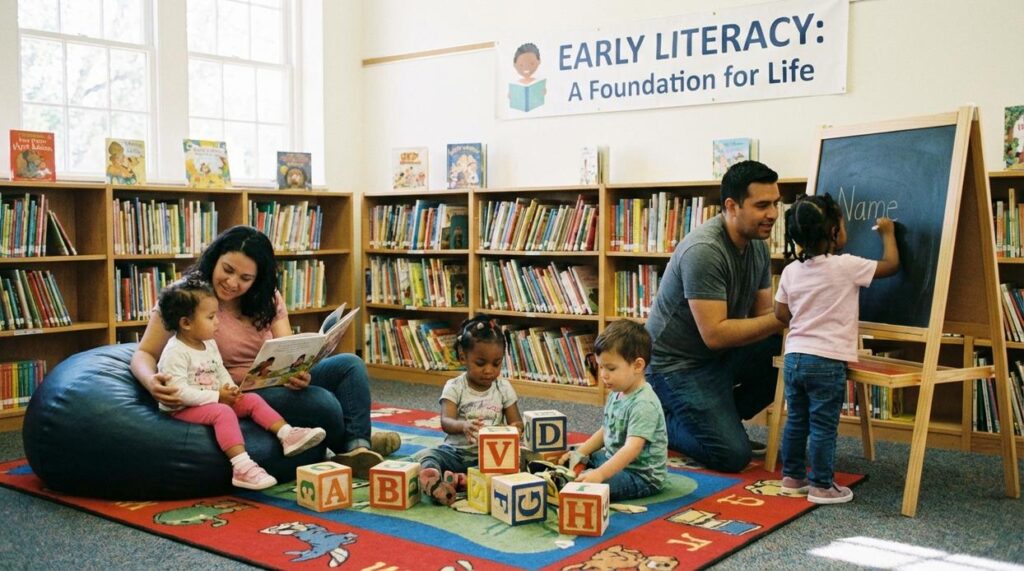

Parenting doesn’t come with a manual—but having the right guidance can make every stage of your child’s growth more meaningful and manageable. If you’re searching for practical parenting strategies, reliable child development insights, toddler care tips, or engaging learning paths for curious young minds, you’re in the right place. This article is designed to give you clear, research-backed advice you can apply right away, whether you’re navigating toddler tantrums, encouraging early literacy, or planning creative art projects for children that spark imagination and confidence.
We’ve drawn from established child development research, early education best practices, and expert-backed parenting frameworks to ensure the information you’re reading is trustworthy and actionable. Our goal is simple: to help you better understand your child’s needs, support their emotional and cognitive growth, and create a home environment where learning feels natural, joyful, and developmentally appropriate.
Encouraging art at home can feel like handing your toddler a paint bomb. However, it doesn’t have to be chaos. Think of creativity as a muscle: the more it’s used, the stronger it grows. Process-based art—where the focus is on exploration rather than a perfect fridge-worthy masterpiece—acts like a playground for the brain.
Start simple. Finger painting builds fine motor control; collage teaches problem-solving (yes, even deciding where the glitter goes counts). Meanwhile, clay modeling strengthens hand muscles needed for writing. These creative art projects for children aren’t just crafts; they’re blueprints for confidence, one colorful mess at a time.
For Toddlers (Ages 2–4): Building Skills Through Sensory Play
Between ages two and four, art isn’t about outcomes—it’s about experience. Sensory play (activities that stimulate touch, sight, smell, and movement) builds neural pathways that support language, coordination, and emotional regulation (Harvard Center on the Developing Child). Some argue structured early academics matter more. But research consistently shows young children learn best through hands-on exploration—not worksheets (American Academy of Pediatrics).
What many guides miss? The why behind the mess. These creative art projects for children are designed with developmental sequencing in mind—each one targets a foundational skill toddlers will need later for writing, reading, and self-regulation.
Project 1: Edible Finger Painting
Why it works: Safe for toddlers who explore with their mouths (because they will).
Develops: Sensory processing, early color recognition.
How-to: Mix plain yogurt with a few drops of food coloring. Spread onto a tray or highchair surface and let them swirl.
(Pro tip: Tape paper down if you want to “save” the masterpiece—otherwise, embrace the abstract.)
Project 2: Play-Doh Sculpting & Stamping
Why it works: Squeezing and rolling strengthens intrinsic hand muscles essential for pencil grip.
Develops: Fine motor control, cause-and-effect understanding.
How-to: Offer forks, spoons, and cookie cutters for stamping patterns.
Project 3: Sticker Line-Up
Why it works: Low mess, high precision.
Develops: Pincer grasp (thumb and forefinger coordination), concentration.
How-to: Draw a bold line and encourage sticker placement along it.
Yes, it’s simple. That’s the point. At this age, simplicity builds brilliance.
For Preschoolers (Ages 4–6): Igniting Imagination & Storytelling
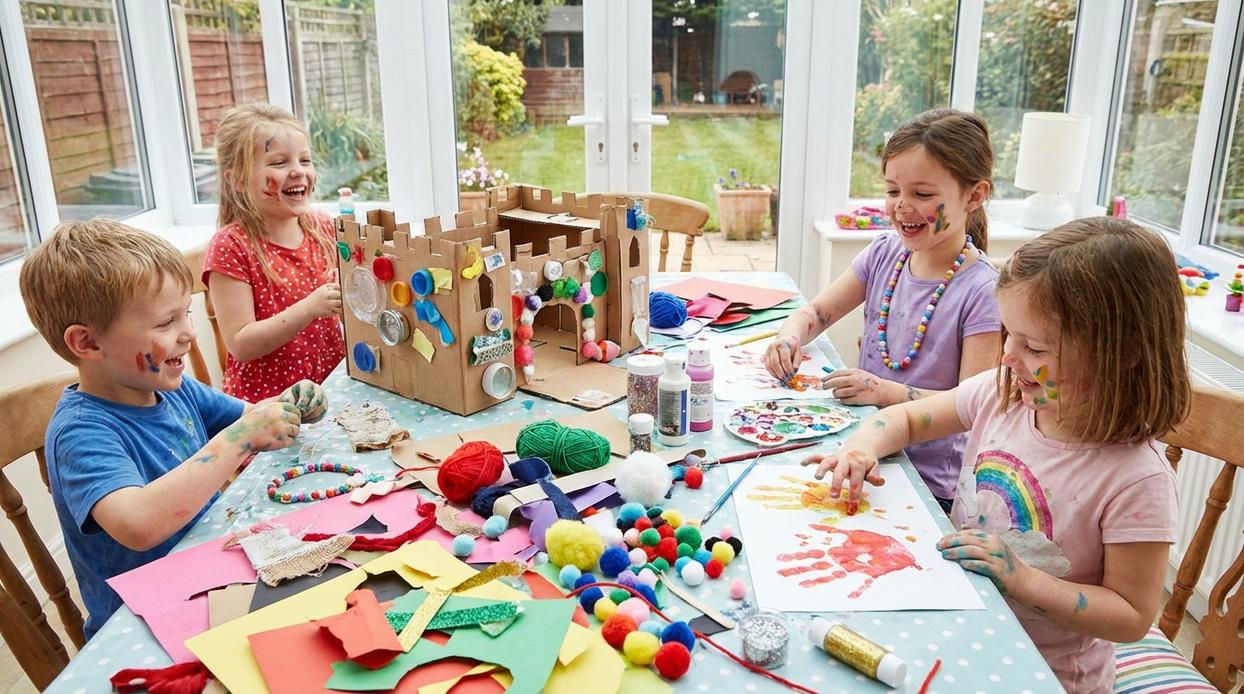
At ages 4–6, children begin using art to represent ideas, feelings, and full-blown stories (yes, even the ones about flying cats who eat pancakes). This stage marks a shift from simple scribbles to intentional creation. In other words, art becomes a storytelling tool.
Some argue preschoolers should focus more on early reading or math drills. However, research from the National Association for the Education of Young Children (NAEYC) shows that open-ended art strengthens language development, problem-solving, and executive function skills—all foundational for academic success. So rather than distracting from learning, art quietly fuels it.
Project Breakdown
| Project | Why It Works | Skills Developed | Key Materials |
|---|---|---|---|
| Recycled Materials Sculpture | Encourages 3D thinking and resourcefulness |
Problem-solving, spatial awareness | Boxes, tubes, bottles, tape |
| Nature Collage | Builds observation and texture awareness | Composition, sensory exploration | Leaves, twigs, petals |
| Paper Bag Puppets | Combines art with performance | Storytelling, emotional expression | Paper bags, yarn, markers |
Recycled Materials Sculpture
Children use cardboard boxes, tubes, and plastic bottles to build robots, castles, or imaginative creatures. This introduces spatial awareness—understanding how objects fit together in space. Pro tip: Offer masking tape first; it’s easier for small hands to manage than glue.
Nature Collage
After a nature walk, children glue collected leaves and petals onto cardboard to create a scene. This strengthens composition skills, or how elements are arranged visually. Plus, it builds observation skills (suddenly, every twig becomes treasure).
Paper Bag Puppets
Turning paper bags into characters blends visual art with dramatic play. When children perform puppet shows, they practice sequencing events and expressing emotions safely.
Together, these creative art projects for children nurture imagination while building practical developmental skills. And if today’s puppet show feels like a mini Broadway debut? That’s storytelling in action.
For Early Elementary (Ages 7–9): Introducing Technique & Detail
Children ages 7–9 are ready to slow down and think like little designers. As one parent put it, “I didn’t realize how capable she was until I stopped helping.” That shift—from quick crafts to intentional technique—builds real confidence.
Project 1: Observational Drawing
Why it works: Observational drawing means sketching what you actually see, not the symbol your brain substitutes (the classic stick-figure sun in the corner). Betty Edwards, author of Drawing on the Right Side of the Brain, explains that learning to truly see shapes and shadows strengthens visual perception.
Develops: Attention to detail, perspective (how objects look smaller farther away).
How-to: Place a toy or fruit on the table. Say, “What shapes do you notice?” or “Where is the darkest shadow?” One child once said, “I never saw that apple has yellow in it!” (That’s the moment it clicks.)
Project 2: DIY Clay Beads
Why it works: A multi-step process teaches sequencing—planning steps in order.
Develops: Fine motor control, patience.
How-to: Roll air-dry clay into beads, poke holes, dry, paint, string. Pro tip: Make extra beads; a few will crack (it’s practically a law of crafting).
Project 3: Watercolor Resist Painting
Why it works: It feels like magic but teaches cause and effect—wax resists water.
Develops: Color blending, material awareness.
How-to: Draw with white crayon, paint over it, and watch designs appear. “It’s like a secret message!” kids often say.
Some argue structured projects limit creativity. But thoughtful guidance in creative art projects for children actually expands skills—so when imagination strikes, they can execute it beautifully.
You now have a toolkit of creative art projects for children that are not just fun, but powerful tools for your child’s development at every stage. The real challenge isn’t love for art—it’s finding easy, meaningful ideas that fit into busy days. When you focus on age-appropriate, process-based art, you trade perfection for paint-splattered joy, the swish of brushes, the earthy smell of clay drying on small fingers. Choose one project this week. Clear a small art corner—paper, crayons, tape within reach—so creativity feels inviting, simple, and wonderfully messy. Let learning unfold in color and laughter right at home together.
To ignite the imagination of young thinkers, incorporating creative art activities—like those highlighted in our article on Fpmomhacks Parenting Hacks From Famousparenting—can provide the perfect blend of inspiration and engagement.
Helping Your Child Thrive Starts Today
You came here looking for real, practical ways to support your child’s growth—and now you have them. From understanding key developmental milestones to using creative art projects for children to spark imagination and learning, you’re better equipped to guide your little one with confidence.
Parenting can feel overwhelming. You want to know you’re making the right choices. You want to nurture curiosity, build strong emotional foundations, and encourage healthy development without second-guessing every step. The strategies you’ve explored here are designed to ease that pressure and give you clear, actionable direction.
The next step is simple: start small and stay consistent. Choose one activity, one conversation, or one learning moment today and build from there. When you intentionally support your child’s development, progress follows.
If you’re ready for trusted, practical parenting guidance that makes everyday growth easier and more meaningful, explore more expert-backed strategies now. Thousands of parents rely on these proven insights to raise confident, curious kids—join them and take the next step today.

 Graciela Robinsonueva writes the kind of child development insights content that people actually send to each other. Not because it's flashy or controversial, but because it's the sort of thing where you read it and immediately think of three people who need to see it. Graciela has a talent for identifying the questions that a lot of people have but haven't quite figured out how to articulate yet — and then answering them properly.
They covers a lot of ground: Child Development Insights, Kids' Blog-Focused Learning Paths, Practical Toddler Care Tips, and plenty of adjacent territory that doesn't always get treated with the same seriousness. The consistency across all of it is a certain kind of respect for the reader. Graciela doesn't assume people are stupid, and they doesn't assume they know everything either. They writes for someone who is genuinely trying to figure something out — because that's usually who's actually reading. That assumption shapes everything from how they structures an explanation to how much background they includes before getting to the point.
Beyond the practical stuff, there's something in Graciela's writing that reflects a real investment in the subject — not performed enthusiasm, but the kind of sustained interest that produces insight over time. They has been paying attention to child development insights long enough that they notices things a more casual observer would miss. That depth shows up in the work in ways that are hard to fake.
Graciela Robinsonueva writes the kind of child development insights content that people actually send to each other. Not because it's flashy or controversial, but because it's the sort of thing where you read it and immediately think of three people who need to see it. Graciela has a talent for identifying the questions that a lot of people have but haven't quite figured out how to articulate yet — and then answering them properly.
They covers a lot of ground: Child Development Insights, Kids' Blog-Focused Learning Paths, Practical Toddler Care Tips, and plenty of adjacent territory that doesn't always get treated with the same seriousness. The consistency across all of it is a certain kind of respect for the reader. Graciela doesn't assume people are stupid, and they doesn't assume they know everything either. They writes for someone who is genuinely trying to figure something out — because that's usually who's actually reading. That assumption shapes everything from how they structures an explanation to how much background they includes before getting to the point.
Beyond the practical stuff, there's something in Graciela's writing that reflects a real investment in the subject — not performed enthusiasm, but the kind of sustained interest that produces insight over time. They has been paying attention to child development insights long enough that they notices things a more casual observer would miss. That depth shows up in the work in ways that are hard to fake.