
Every parent wants to see their child grow with confidence and curiosity, yet knowing how to encourage that growth can feel overwhelming. This guide tackles a common challenge: turning vague hopes like “do better in school” into clear, motivating steps forward. By focusing on goal setting for children, we show you how to replace pressure with purpose and frustration with progress. You’ll discover a simple, practical framework for creating achievable targets that build self-esteem and spark a genuine love of learning—because real growth happens when progress is celebrated, not just perfection.
The “Just Right” Challenge: Why Small Wins Build Big Confidence
By integrating goal setting with fun activities, such as those found in our article on ‘Beginner Coding Concepts Made Simple for Kids,’ children can develop a confident mindset that fosters both creativity and problem-solving skills.
When it comes to goal setting for children, bigger isn’t always better. Research in developmental psychology shows that kids thrive when tasks sit inside their growth zone—that sweet spot between boredom and overwhelm. Think of it like learning to ride a bike: training wheels first, steep hills later.
Stretch goals sound inspiring, and some argue they “build grit.” But when expectations outpace ability, children often experience anxiety and avoidance instead of resilience. Small, clearly defined objectives offer measurable wins—finishing a puzzle, reading five pages, tying shoes independently. Each success triggers a dopamine boost, reinforcing effort and motivation.
Key features of the “just right” approach include:
- Clear, achievable benchmarks that show visible progress
- Immediate, specific feedback tied to effort, not talent
- Gradual increases in difficulty as mastery develops
These structured steps create a positive feedback loop: mastery builds confidence, confidence fuels curiosity, and curiosity invites new challenges. Over time, children internalize the belief, “I can figure this out.” That mindset doesn’t just improve performance; it strengthens emotional resilience and a lifelong love of learning.
Pro tip: celebrate effort consistently; small applause today builds brave risk-takers tomorrow in meaningful ways. Start small.
A Parent’s Blueprint: Setting SMART Goals for Young Learners

Have you ever asked your child to “clean your room” and somehow ended up with toys stuffed under the bed? Sound familiar?
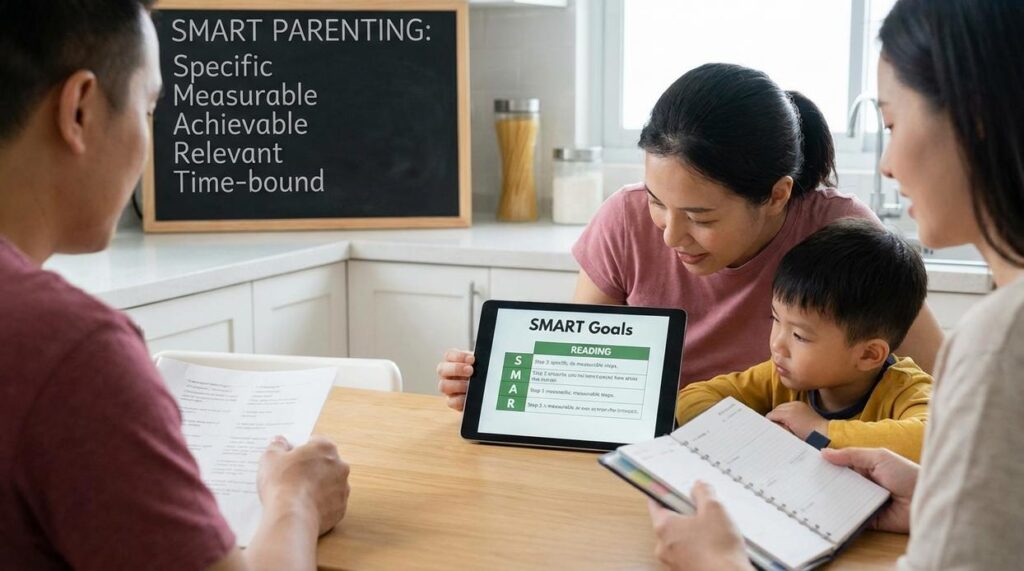
That’s where the SMART framework comes in. Originally used in business, SMART stands for Specific, Measurable, Achievable, Relevant, and Time-bound. When adapted thoughtfully, it becomes a powerful tool for goal setting for children.
Specific means crystal clear. Instead of “clean your room,” try: “Put all your LEGOs back in the red bin.” A specific goal removes guesswork (and creative loopholes).
Measurable answers the question: How will we know it’s done? “Practice piano for 15 minutes” is measurable. “Get better at piano” is not. According to the American Psychological Association, clearly defined and trackable goals improve follow-through (APA, 2020).
Achievable keeps expectations age-appropriate. A four-year-old might aim to put shoes on independently. An eight-year-old might organize homework using a checklist. When goals stretch but don’t overwhelm, children build confidence instead of frustration.
Relevant connects the task to something your child actually cares about. “Learn to tie your shoes so you can wear your new light-up sneakers” works better than “because I said so.” (We’ve all tried that one.) Motivation research from Stanford shows children engage more when tasks feel personally meaningful (Stanford GSE, 2018).
Time-bound adds gentle structure. “Before we go to the park” or “by Saturday” creates urgency without pressure. Deadlines aren’t about stress; they’re about clarity.
Wondering how this fits into your bigger parenting strategy? Explore how to build a personalized learning path for your child to align goals with your child’s growth.
After all, when goals are clear, progress feels possible—and success becomes something your child can actually see.
Goal-Setting in Action: Practical Examples for Every Age
Effective goal setting for children looks different at every stage. What works for a toddler won’t motivate a second grader (and vice versa). Think of it as training wheels versus a two-wheeler—same destination, different balance.
Toddlers (Ages 2–3)
At this stage, goals focus on independence and routine.
- “Help put your blocks away.”
- “Put your cup on the table after a snack.”
- “Try to pull up your own pants.”
Option A: Expect perfect results.
Option B: Celebrate effort and small progress.
Option B wins every time. Toddlers are building confidence, not chasing perfection (they’re basically tiny interns learning the ropes).
Preschoolers (Ages 4–5)
Now you can introduce early learning and social development.
- “Recognize and name five colors.”
- “Learn to write the first letter of your name.”
- “Take turns with a toy for five minutes.”
Option A: Push academic drills.
Option B: Blend learning with play.
Play-based goals stick better because young brains retain information through interaction and repetition. Pro tip: turn goals into games to boost follow-through.
Early Elementary (Ages 6–8)
Children can handle responsibility and habit-building.
- “Read for 20 minutes before bed.”
- “Make your bed every morning for a week.”
- “Finish homework before asking for screen time.”
Option A: Constant reminders.
Option B: Clear expectations with natural consequences.
Option B encourages ownership. When kids see the link between actions and outcomes, habits form faster. Like leveling up in a video game, progress feels earned.
The key? Match the goal to the developmental stage, and adjust expectations as skills grow.
Celebrating the Journey, Not Just the Destination
When it comes to goal setting for children, the real win isn’t just reaching the milestone — it’s nurturing the mindset that gets them there. You wanted a way to help your child grow with confidence, resilience, and curiosity. By focusing on effort over outcome and breaking big skills into small, joyful steps using SMART goals, you now have a clear, simple path forward.
The pressure to “get it right” as a parent can feel overwhelming. You don’t want your child to fear failure or give up too soon. By celebrating persistence and praising effort, you’re building a lifelong love of learning — not just checking off achievements.
Start today. Choose one small, achievable objective and focus on encouraging the process, not just the result. Small, consistent steps create confident, capable kids. If you’re ready to raise a resilient learner who thrives on growth, begin with one goal — and celebrate every step forward.