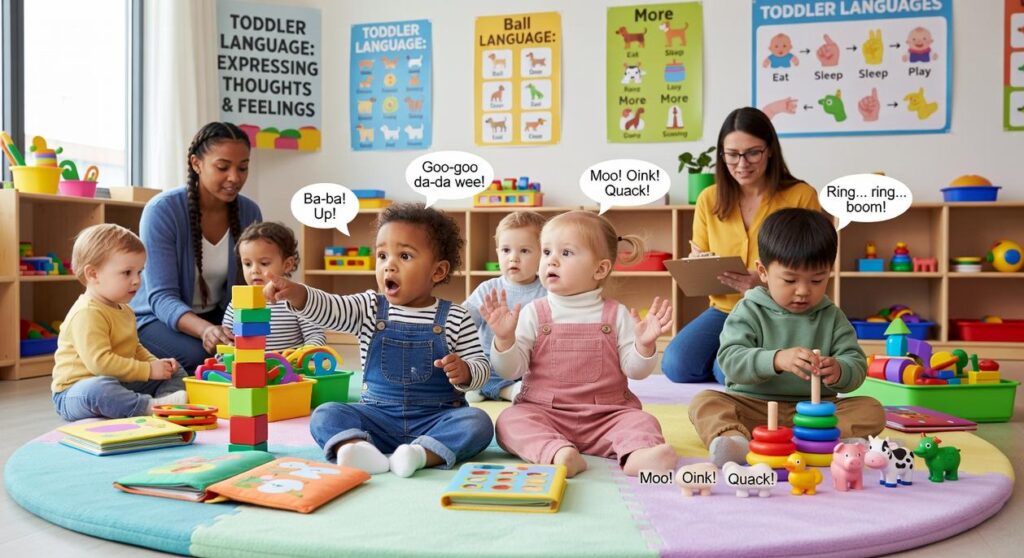

Every parent wants to feel confident they’re giving their child the best possible start. If you’re searching for practical parenting strategies, clear child development insights, or age-appropriate toddler care tips, this article is designed to guide you. We focus on what truly matters: understanding your child’s growth, supporting healthy habits at home, and recognizing key cognitive development milestones that shape learning and behavior.
Many parents feel overwhelmed by conflicting advice online. Here, you’ll find research-informed guidance grounded in established child development principles and reviewed against current early childhood education standards. Our goal is simple: to translate expert-backed knowledge into clear, actionable steps you can apply immediately.
From building strong routines to nurturing curiosity and emotional resilience, this guide will help you better understand your child’s needs and confidently support their learning journey—every step of the way.
Watching a baby curl fingers around yours feels miraculous; hearing a toddler ask “why?” feels like meeting a scientist in pajamas. Yet wonder turns into worry. Is my child behind? Should they read earlier?
Here’s a contrarian take: earlier isn’t always better. Pushing flashcards over play can backfire. Instead, understand cognitive development milestones and support them naturally.
| Age | Focus | Simple Support |
|---|---|---|
| 0–2 | Sensory exploration |
Talk, sing, respond |
| 3–5 | Imagination | Open-ended play |
| 6–12 | Logic | Ask “how” questions |
Follow curiosity, not comparison.
The Explorer Phase: Learning Through Senses and Actions (Birth to 2 Years)
By recognizing key cognitive development milestones by age, parents can more effectively tailor their support and guidance, ensuring that children are well-equipped to master problem-solving skills early on, as discussed in our article “Problem-Solving Skills Every Parent Should Teach Early.
From birth to age two, babies operate in what psychologist Jean Piaget called the Sensorimotor Stage—a period when learning happens through sensory input (what they see, touch, taste, hear, and smell) and physical movement. In other words, the world is their laboratory. According to Piaget’s research, infants build knowledge by acting on their environment, not by thinking abstractly (Piaget, 1952).
One of the biggest breakthroughs during this stage is object permanence—the understanding that something still exists even when it’s out of sight. Around 8–12 months, babies begin showing signs of this skill (Baillargeon, 1987). That’s why peek-a-boo is endlessly entertaining: it playfully tests this new realization.
Equally important is learning cause and effect. When a baby shakes a rattle and hears noise, neural connections strengthen. When they drop a spoon and you pick it up, they’re running a tiny experiment (again and again). These small discoveries form essential cognitive development milestones.
Some argue babies are “too young” for structured interaction. However, research shows responsive caregiving directly supports brain growth (Harvard Center on the Developing Child, 2016).
To nurture this phase, offer safe textured toys, play simple blanket-hiding games, and consistently respond to their actions. For more early learning ideas, explore this helpful guide on parenting strategies. (Pro tip: repetition isn’t boredom—it’s brain building.)
Between ages two and seven, children enter what Jean Piaget called the Preoperational Stage. During this period, language explodes and imagination takes center stage. A wooden block is no longer just wood; it becomes a race car, a sandwich, or a phone ringing in a busy office.
This leap is known as symbolic representation—the ability to let one thing stand for another. In practice, pretend play becomes a child’s laboratory. Research from the American Academy of Pediatrics shows imaginative play strengthens problem-solving and emotional regulation skills (AAP, 2018). When a child “feeds” a doll or battles imaginary dragons, they are rehearsing real feelings in a safe space. In other words, play is serious work.
However, this stage also includes egocentrism. Children struggle to see another person’s perspective. Importantly, this is not selfishness; it is a normal feature of cognitive development milestones. For example, if they cover their eyes, they may believe you cannot see them either (peekaboo logic at its finest).
So how can parents respond? First, offer simple props—scarves, boxes, spoons—and let imagination do the heavy lifting. Next, while reading together, pause and ask, “What do you think happens next?” Finally, label emotions clearly: “You’re frustrated because the tower fell.” Over time, this builds perspective-taking and empathy.
Many guides stop at definitions. Here, the advantage is practical integration: weaving language, emotion coaching, and play into everyday routines.
The Logical Thinker: Making Sense of the Concrete World (7 to 11 Years)

Between ages 7 and 11, children enter what psychologists call the Concrete Operational Stage. Thinking becomes more logical, organized, and flexible—but here’s the catch: it’s still tied to real, tangible things. Abstract ideas? Not quite yet.
One of the biggest cognitive development milestones in this phase is conservation—the understanding that quantity doesn’t change just because appearance does. Pour water from a short, wide glass into a tall, thin one, and a younger child might insist there’s “more.” Now, they recognize it’s the same amount. (No magic refills involved.)
Another key shift is reversibility, the ability to mentally undo actions. If 3 + 4 = 7, then 7 − 4 = 3. This seems obvious to adults, but it represents a major leap in logical thinking.
Here’s the contrarian take: many assume this stage means kids are ready for purely academic, worksheet-heavy learning. I disagree. Logic grows stronger through doing, not memorizing. Simple science experiments, strategy-based board games, cooking measurements, or planning a family outing activate real reasoning skills far better than drills alone.
Some argue screens can teach these skills just as well. Sometimes. But manipulating real objects builds deeper understanding (think LEGO over lecture).
Pro tip: When your child solves a problem, ask, “How do you know?” It strengthens reasoning pathways.
Supporting logic now also reinforces social growth, which connects directly to how emotional intelligence shapes a childs future.
The Abstract Thinker: Exploring ‘What Ifs’ and Big Ideas (12 Years and Up)
Around age 12, many kids enter the Formal Operational Stage, a phase of cognitive development milestones marked by abstract reasoning and systematic problem-solving. In other words, they can finally debate justice at the dinner table without needing a concrete example (yes, even if it feels like you’re arguing a Supreme Court case).
Some argue that teens are “too young” for big conversations about morality, politics, or algebraic logic. After all, aren’t they still impulsive? True, emotional regulation is still developing. However, research from Jean Piaget’s theory of cognitive development shows that abstract thought typically emerges in early adolescence (Piaget, 1972).
This means they can grasp concepts like freedom, infinity, or x in an equation—without seeing or touching them. They also use deductive reasoning: if all mammals breathe and whales are mammals, then whales breathe.
So, discuss current events. Ask “what if” questions. Encourage value exploration. Pro tip: Let them wrestle with ideas before jumping in to correct them.
From sensory play to abstract reasoning, you’ve watched your child travel an epic arc worthy of a Pixar montage. You now have a clearer map of the stages, including cognitive development milestones in the section once exactly as it is given, turning “Is this normal?” into confident action. When you understand the why behind behaviors, confusion fades.
Development isn’t a race (despite what Instagram reels suggest). It’s about:
• PATIENCE
• PRESENCE
Provide love, stimulation, and space to explore. Observe. Celebrate. Stay curious. Trust the process. After all, every hero’s journey unfolds at its own pace—so why rush the sequel?
Helping Your Child Thrive at Every Stage
You came here looking for clarity on how to better support your child’s growth—and now you have a stronger understanding of what truly matters during these early years. By recognizing key cognitive development milestones, you’re better equipped to nurture curiosity, build confidence, and guide your child through each exciting stage of learning.
It’s overwhelming when you’re unsure if your child is on track or if you’re doing “enough.” Every parent worries about missed signs or missed opportunities. But with the right strategies and insights, you can turn that uncertainty into confident, informed action.
Now it’s time to take the next step. Start applying these practical parenting strategies at home, observe your child’s progress, and stay proactive about their learning journey. For more expert-backed toddler care tips, developmental guidance, and proven learning paths trusted by thousands of parents, explore our resources today and give your child the strong start they deserve.

 Ronna Fisheroda writes the kind of child development insights content that people actually send to each other. Not because it's flashy or controversial, but because it's the sort of thing where you read it and immediately think of three people who need to see it. Ronna has a talent for identifying the questions that a lot of people have but haven't quite figured out how to articulate yet — and then answering them properly.
They covers a lot of ground: Child Development Insights, Practical Toddler Care Tips, Kids' Blog-Focused Learning Paths, and plenty of adjacent territory that doesn't always get treated with the same seriousness. The consistency across all of it is a certain kind of respect for the reader. Ronna doesn't assume people are stupid, and they doesn't assume they know everything either. They writes for someone who is genuinely trying to figure something out — because that's usually who's actually reading. That assumption shapes everything from how they structures an explanation to how much background they includes before getting to the point.
Beyond the practical stuff, there's something in Ronna's writing that reflects a real investment in the subject — not performed enthusiasm, but the kind of sustained interest that produces insight over time. They has been paying attention to child development insights long enough that they notices things a more casual observer would miss. That depth shows up in the work in ways that are hard to fake.
Ronna Fisheroda writes the kind of child development insights content that people actually send to each other. Not because it's flashy or controversial, but because it's the sort of thing where you read it and immediately think of three people who need to see it. Ronna has a talent for identifying the questions that a lot of people have but haven't quite figured out how to articulate yet — and then answering them properly.
They covers a lot of ground: Child Development Insights, Practical Toddler Care Tips, Kids' Blog-Focused Learning Paths, and plenty of adjacent territory that doesn't always get treated with the same seriousness. The consistency across all of it is a certain kind of respect for the reader. Ronna doesn't assume people are stupid, and they doesn't assume they know everything either. They writes for someone who is genuinely trying to figure something out — because that's usually who's actually reading. That assumption shapes everything from how they structures an explanation to how much background they includes before getting to the point.
Beyond the practical stuff, there's something in Ronna's writing that reflects a real investment in the subject — not performed enthusiasm, but the kind of sustained interest that produces insight over time. They has been paying attention to child development insights long enough that they notices things a more casual observer would miss. That depth shows up in the work in ways that are hard to fake.