
Every parent wants to raise a confident, capable child—but knowing how to nurture those skills in everyday moments can feel overwhelming. From toddler tantrums to endless “why” questions, childhood is full of opportunities for growth if you know how to guide them. This article is designed to help you understand child development milestones, apply practical toddler care strategies, and focus on teaching problem solving skills in ways that feel natural and age-appropriate.
Parents often struggle to balance guidance with independence, unsure when to step in and when to step back. Here, you’ll find research-backed insights drawn from established child development principles and educational best practices to help you make informed decisions. We break down proven strategies into simple, actionable steps so you can confidently support your child’s emotional, cognitive, and social growth—turning everyday challenges into meaningful learning experiences.
From Puzzles to People: Building Your Child’s Problem-Solving Superpower
Your child is on the floor, frustrated because a puzzle piece won’t fit. You’re tempted to fix it. We’ve all been there. But here’s the shift: instead of showing them what to think, focus on teaching problem solving skills so they learn how to think.
Start by pausing. Then ask, “What else could you try?” This simple question builds critical thinking—meaning the ability to analyze and test ideas independently.
Next, model calm problem-solving in daily life. Burnt toast? “Let’s figure this out.”
Finally, praise effort over outcome. Over time, small moments like these build resilience, confidence, and true independence.
Why Rote Memorization Isn’t Enough: The Core of True Problem-Solving
Memorizing facts is like storing books on a shelf. Reasoning is knowing how to USE them. Recall means repeating information exactly as learned. Reasoning means applying that knowledge to a brand-new situation. A child might memorize that 5 + 5 = 10, but can they figure out how many fingers are on two hands without being told? That’s the difference.
Problem-solving, in child-friendly terms, is identifying a goal, noticing what’s in the way, and creatively testing strategies to move forward. It’s less “What’s the right answer?” and more “What can I try next?” (Yes, even adults forget that.)
Some argue memorization builds discipline and a strong academic base. True. Foundational knowledge matters. But facts alone don’t prepare children for surprises. Life rarely hands out multiple-choice questions.
That’s why teaching problem solving skills should be a priority at home and school. Encourage kids to explain their thinking, try different approaches, and reflect on what worked.
Long term, this builds creativity, emotional resilience, critical thinking, and self-esteem. It also helps socially: negotiating toy-sharing, resolving playground conflicts, and understanding feelings. PRO TIP: When disagreements happen, ask, “What’s another solution?” instead of stepping in immediately.
The Foundational Mindset: Fostering Curiosity and Embracing “Productive Struggle”
At its core, a growth mindset is the belief that abilities can improve with effort. In simple terms: challenges help you grow stronger, and mistakes mean you’re trying. Research by psychologist Carol Dweck shows that children who view intelligence as flexible are more resilient and motivated (Dweck, 2006). In other words, the way we talk about effort matters.
So, instead of saying, “You’re so smart,” try, “I love how you kept trying different ways!” This subtle shift praises persistence over talent. Over time, children internalize the message that effort—not luck or “being gifted”—drives success. (And yes, they notice the difference.)
Equally important is productive struggle—allowing kids to wrestle with a problem before stepping in. While it’s tempting to rescue them, brief frustration builds stamina and confidence. Pro tip: count to ten before offering help; often, they’ll solve it themselves.
Meanwhile, spark curiosity by asking open-ended questions like, “I wonder what would happen if…?” or “What else could we try?” During play or reading, these prompts stretch thinking naturally.
Ultimately, teaching problem solving skills starts with modeling patience, curiosity, and trust in the process—because growth isn’t instant, but it is powerful.
Playful Problem-Solving: Strategies for Toddlers and Preschoolers (Ages 2–5)
For toddlers and preschoolers, play isn’t just fun—it’s how they think, test, and understand the world. In fact, child development research shows that play-based learning strengthens cognitive flexibility and early executive function skills (Harvard Center on the Developing Child). So rather than formal lessons, focus on teaching problem solving skills through everyday play.
Block Play & Building
Turn block time into a mini engineering challenge. Ask, “How can we build the tower taller without it falling?” or “Which block makes a stronger base?” Engineering, simply put, is designing solutions to problems. When your child experiments with wider bases or balanced pieces, they’re learning cause and effect (future architect vibes, anyone?).
Puzzles and Sorting
Similarly, puzzles build spatial reasoning—the ability to understand how shapes fit together. Encourage them to notice patterns and narrate their effort: “You turned the piece, and it fit!” This reinforces persistence, a core feature of resilient learners.
Storytelling Scenarios
During story time, pause and ask, “What could the character do now?” Considering alternative solutions builds critical thinking. Some argue kids are too young for this level of reflection. However, even simple choices spark creativity.
Empower with Choices
Finally, offer small real-world decisions: “It’s cold outside. What should you wear?” These daily moments pair beautifully with positive discipline techniques that encourage better behavior, helping children connect actions with outcomes.
Leveling Up: Structured Techniques for School-Aged Children (Ages 6-10)
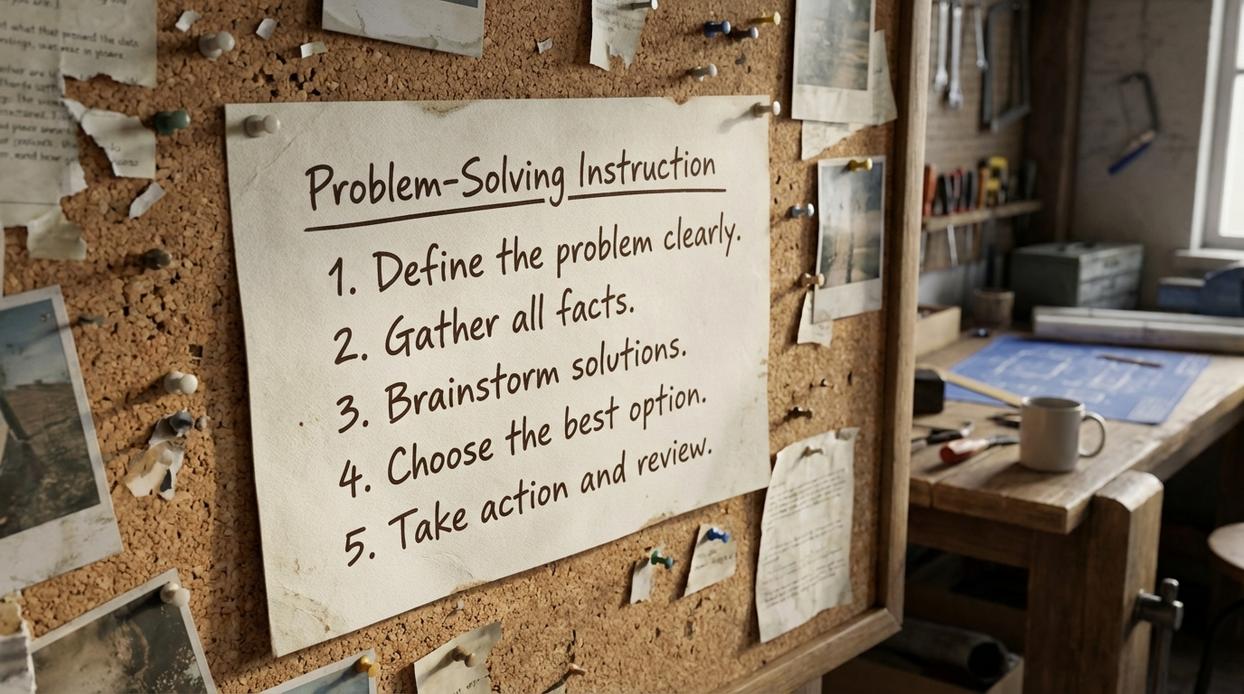
Last week, my eight-year-old stared at a toppled block tower and declared, “It’s impossible!” Instead of fixing it for him, I introduced a simple four-step plan: 1. What is the problem? 2. What are some possible ideas to fix it? 3. Let’s try one idea. 4. Did it work? What did we learn? Suddenly, the meltdown became a mission.
From there, we practiced through play. Board games like checkers build strategy, while collaborative games teach teamwork (think Avengers assembling, but with snacks). Logic puzzles strengthen reasoning, and beginner coding apps show how sequence and consequence connect. Over time, I’ve seen how teaching problem solving skills this way builds confidence.
Meanwhile, real life offers endless practice. When planning dinner, I ask, “What ingredients do we need, and what’s our budget?” Organizing a room? We measure shelves and sort books. Planning an outing? We compare options.
Finally, break big tasks into smaller steps. Homework becomes: read, outline, write, review. Chores become: pick up, sort, store. As children see progress, overwhelm shrinks. And gradually, they stop saying “impossible” and start asking, “What’s my first step?” That shift changes everything for growing minds. Every day.
Raising a resilient thinker, one challenge at a time, means remembering that problem-solving isn’t magic; it’s muscle. Every frustration is a workout building neural pathways. We all want capable, confident kids who can handle life’s curveballs without crumbling? Yet I believe we sometimes rush to rescue them, accidentally stealing the reps that build grit.
On the other hand, when we focus on teaching problem solving skills, we hand them a toolkit for life. It starts with a growth mindset—praising effort, asking questions. So, start today by asking one more how or what if question, and watch your problem-solver grow
Help Your Child Thrive With Confidence and Curiosity
You came here looking for practical ways to support your child’s growth—and now you have clear, actionable strategies to nurture confidence, independence, and strong thinking skills at home. Parenting can feel overwhelming when you’re unsure how to guide big emotions, encourage learning, or build resilience the right way.
The truth is, without the right tools, it’s easy to second-guess yourself or miss simple opportunities that shape lifelong success. Focusing on teaching problem solving skills gives your child the ability to navigate challenges, think critically, and grow into a capable, self-assured learner.
Don’t let uncertainty hold your child back. Get expert-backed parenting strategies trusted by thousands of families who want real results. Explore more proven tips today and start turning everyday moments into powerful learning experiences your child will benefit from for years to come.